Real "caught on camera" moments that get people every time — which one hits hardest?
Some of the internet's most-rewatched clips aren't stunts, they're ordinary people living through something huge while someone happened to be filming. A parent walks into a classroom nobody expected. A baby hears a parent's voice for the very first time. A dog waits by the door for a soldier who's finally home. A stranger quietly settles someone else's bill and walks away before they can say thank you. None of these moments were staged for views, yet they've been watched by millions who just wanted proof that people can still surprise each other in good ways. Which one actually gets you?
 🏆 Leading: A stranger settles the bill A mom standing at a layaway counter, still short on a holiday order, watches a stranger quietly hand over their card and cover the rest before walking out without leaving a name. She only finds out what happened after he's already gone. [Watch on YouTube] (60%)
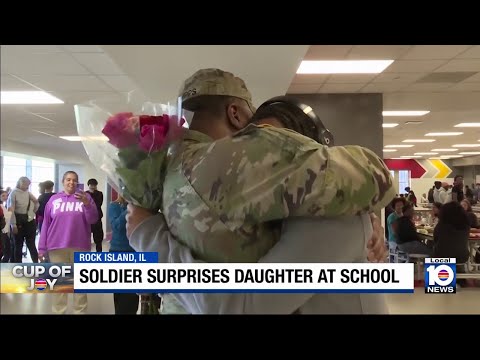
 🥈 Homecoming at school A soldier who'd been deployed for nine months walks straight into his daughter's classroom without warning. It takes her a second to process it's really him — then she's out of her seat and into his arms while the whole room claps. [Watch on YouTube] (20%)
 🥉 The dog remembers After a year-long deployment, a soldier walks back through the door and his dog loses it completely — spinning, whining, refusing to stop licking his face. No training video ever captures a reunion like an actual reunion. [Watch on YouTube] (20%)🌍 🇨🇳 China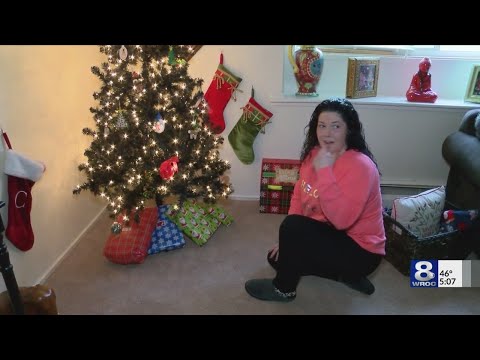

Poll as Guest Infographics
Similar to hewsay's "Real "caught on camera" moments that get people every time — which one hits hardest?"
Are the paranormal activities which are caught on camera real or not? Are the paranormal activities which are caught on camera real or not? Originally Answered: Are paranormal activities caught in a camera? If Energy Of Any Paranormal Event Is High You Can Listens Voices Too. ...
What are the saddest scenes of famous people ever captured on camera? Originally Answered: What are some of the most amazing moments caught on camera? Originally Answered: What are some of the most amazing moments caught on camera? What are some of the most amazing moments cau...
The Mandela Effect: why do thousands of strangers share the exact same false memory?
Quick test: does the Monopoly Man wear a monocle? Is it the "Berenstein Bears" or the "Berenstain Bears"? Did Darth Vader ever actually say "Luke, I am your father"? If you answered wrong on any of those, you're not alone — millions of people confidently misremember the same details, right down to the spelling. This phenomenon got its name in 2009 when researcher Fiona Broome realized she — and thousands of others online — clearly remembered Nelson Mandela dying in prison in the 1980s. He hadn't. He was released in 1990 and lived until 2013.
What makes the Mandela Effect genuinely unsettling isn't that people forget things — it's that totally unconnected strangers converge on the exact same wrong memory, often with vivid confidence. Psychologists mostly chalk it up to how memory actually works: brains don't record events like a camera, they reconstruct them from fragments, filling gaps with whatever "feels" plausible. But a small, persistent internet subculture insists the consistency is too precise for a simple glitch in the brain, and reaches for a much stranger explanation instead.
 🏆 Leading: Some people take this all the way seriously, and while it sounds like science fiction, the argument isn't as easy to laugh off as it first appears. The idea: reality occasionally "branches" or overlaps with a near-identical parallel timeline, and the shift leaves behind residue — people who "remember" the version of events from the timeline we apparently left. Proponents point to physics concepts like the many-worlds interpretation of quantum mechanics, where every possible outcome technically happens somewhere, as a legitimate framework rather than just a metaphor borrowed for spooky internet threads.
Nobody serious claims this is proven — it's a minority, largely unfalsifiable position that mainstream physicists reject as a misapplication of quantum theory to macroscopic memory. But its defenders ask a fair question back: why does this specific explanation keep resurfacing independently across cultures and decades, long before "multiverse" was a pop-culture buzzword? Coincidence, or a genuinely strange thread worth pulling on rather than dismissing outright? (71%)
 🥈 The explanations feel a little too convenient. Sure, "brains reconstruct memories" sounds tidy — but it doesn't actually explain why specific, oddly detailed memories converge across millions of strangers who never spoke to each other, span different countries and generations, and in some cases predate the internet making cross-contamination easy. People don't just vaguely misremember the Monopoly Man — they describe exactly where the monocle sat and which eye. That's a strange amount of shared specificity for something psychology treats as a footnote.
No study has definitively resolved why particular false memories cluster so precisely rather than being randomly distributed noise, the way you'd expect from ordinary forgetting. Researchers can point to mechanisms — schema theory, the misinformation effect — without actually explaining why the errors pile up on the same handful of details worldwide, independently, instead of scattering evenly. Calling that "solved" feels premature. Something about how collective memory forms in the internet age is clearly still not fully mapped. (29%)🌍 🇨🇳 China
Poll as Guest Infographics
Similar to hewsay's "The Mandela Effect: why do thousands of strangers share the exact same false memory?"
Why is it called the Mandela effect? What is the origin of the Mandela effect? As long as you keep the Mandela Effect grounded in reality as strictly a false memory shared by the general public, it does seem to be valid. As long as you keep the Mandela Effect grounded in reali...
If the Mandela Effect were Real, Why Do Some People Remember the Original Timeline and Other People Don't? If one treats the question hypothetically (“if the Mandela Effect were real” meaning genuine alternate timelines or reality shifts), the observed pattern (some remember t...