Hui Ka Yan Sentenced to Life: Genuine Accountability for Evergrande's Fraud or a Scapegoat for China's Property Crisis?
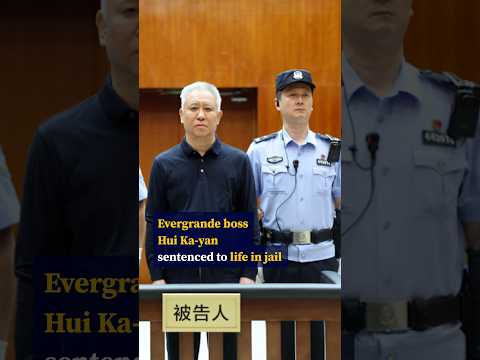
On August 20, 2026, the Shenzhen Intermediate People's Court sentenced Hui Ka Yan (Xu Jiayin), 67, founder of China Evergrande Group, to life in prison after he pleaded guilty to eight charges including fundraising fraud, illegally taking public deposits, fraudulently issuing securities, and bribery. The court fined Evergrande Group 8.82 billion yuan and Evergrande Real Estate Group 7 billion yuan, and ordered confiscation of Hui's personal assets. Prosecutors said Evergrande overstated revenue by tens of billions of dollars in 2019-2020 to sustain borrowing, while the group's total liabilities topped $300 billion before its 2021 default helped trigger China's broader property-sector crisis. More than 50 other Evergrande executives were sentenced alongside Hui, with terms ranging from 22 months to 18 years. Chinese homeowners and investors who lost savings in unfinished apartments and wealth-management products reacted with visible anger online.
 🏆 Leading: Hui is a convenient scapegoat for a systemic crisis that regulators, state banks, and local governments all fueled for decades by encouraging aggressive real-estate borrowing. Locking up one man for life doesn't return the savings of the millions of homebuyers and wealth-management investors still waiting for unfinished apartments or repaid funds. (45%)
 🥈 This is genuine accountability. Hui orchestrated one of the largest corporate frauds in history, inflating revenue by tens of billions of dollars while raising money from ordinary depositors and investors under false pretenses, and a life sentence with billions in fines shows even China's wealthiest tycoons face real consequences. (27%)
 🥉 The verdict matters less as punishment for Hui personally than as a signal to the rest of China's debt-laden property industry and to jittery investors that Beijing will crack down hard on corporate fraud. It's political theater meant to restore confidence, even as the sector's deeper $300 billion-plus debt overhang remains largely unresolved. (27%)🌍 🇨🇳 China
Poll as Guest Infographics
Similar to hewsay's "Hui Ka Yan Sentenced to Life: Genuine Accountability for Evergrande's Fraud or a Scapegoat for China's Property Crisis?"
Title: Reddit - The heart of the internet # This Is the End of China’s Once Mightiest Property Firm (Evergrande). [r/China - This Is the End of China’s Once Mightiest Property Firm (Evergrande)](https://www.nytimes.com/2025/08/24/business/china-evergrande-delisted.html). # Eve...
The scapegoat can do well in school, work, and the way they live their life but the parents always compare the scapegoat to the other child and say why can’t you be like so and so? The scapegoat can do well in school, work, and the way they live their life but the parents alwa...
Power Posing: can standing like Wonder Woman for two minutes actually change your hormones and your life?
In 2012, psychologist Amy Cuddy gave one of the most-watched TED talks of all time, claiming that holding an expansive "power pose" — think hands on hips, feet planted wide, chin up — for just two minutes could raise testosterone, lower cortisol, and make you feel measurably more confident before a big moment like a job interview or a pitch.
The idea spread everywhere: coaches, teachers, and job seekers adopted power posing as a pre-game ritual, and the talk became one of the most viewed in TED's history. But starting around 2015, large replication studies failed to reproduce the original hormone findings, and in 2016 one of the study's own co-authors, Dana Carney, publicly said she no longer believed the effect was real. Cuddy has continued to defend a scaled-back version of the claim — that posture shifts how you feel, even if it doesn't shift your biochemistry.
Power posing is now one of the most-cited examples of psychology's "replication crisis," a period when a surprising number of famous, textbook-worthy findings turned out to be shakier than they first appeared. So — did the original research get something real, or did a viral TED talk outrun the evidence?

 🏆 Leading: The core effect is real — poses shift confidence and behavior. The headline hormone claims — that a two-minute pose measurably raises testosterone and lowers cortisol — were the weakest part of the original study, and it's fair that those specific numbers didn't hold up in larger replications. But throw out the hormones and there's still a real, repeatable finding underneath: how you physically hold your body changes how you feel and how you act, even if the mechanism isn't glandular.
Multiple follow-up studies, including some of the same larger replications that debunked the hormone claims, still found that people who adopted expansive postures reported feeling more powerful, took on more financial risk in decision-making tasks, and were rated by outside observers as more confident during interviews. That's not nothing — it just means the honest version of "power posing works" is a psychological and behavioral effect, not a biological one. Treating the whole idea as debunked throws out a real, useful finding along with an overstated one. (33%)
 🥈 It's a textbook case of the replication crisis — the effect isn't real. Take a step back and look at what the original 2010 study actually was: 42 college students, a lab task, and self-reported feelings — a sample size far too small to responsibly generalize into a global TED talk claiming physiological change. When researchers with far larger, better-powered samples tried to reproduce the testosterone and cortisol findings starting in 2015, the effects vanished. Not weakened — vanished.
Perhaps most damning: Dana Carney, one of the three original co-authors, published a public statement in 2016 saying she no longer believed the power posing effect was real and that she wouldn't run the study again. When a scientist disavows her own famous finding, that's about as strong a signal as psychology ever gives. Power posing survived in the public imagination mostly because it was an appealing, actionable story — just stand a certain way and change your life — not because the evidence held up under scrutiny. (33%)
 🥉 It's real, but only as self-perception — not biology. The most accurate answer is probably the least satisfying one: both sides are half right. The biological claims — the specific testosterone and cortisol shifts — did not replicate in larger, more rigorous studies, and treating them as settled science was always premature. That part of the popular narrative should be retired.
But subjective, self-reported confidence is a different story. Multiple studies still find that when people are instructed to stand or sit in more expansive postures, they describe feeling calmer and more in control afterward, similar to how other simple behavioral rituals — a pre-game routine, a power outfit, a rehearsed opening line — can shift someone's mindset without doing anything to their hormones. That's a real psychological phenomenon worth taking seriously, even if the mechanism is expectation and self-perception rather than biochemistry. Power posing might genuinely help you feel ready — it just doesn't turn you into someone else on a cellular level. (33%)🌍 🇨🇳 China
Poll as Guest Infographics
Similar to hewsay's "Power Posing: can standing like Wonder Woman for two minutes actually change your hormones and your life?"
Title: Which humanoid DC female character could easily beat Wonder Woman? Has Wonder Woman ever actually been humiliated by another female hero/villain? - Quora Which humanoid DC female character could easily beat Wonder Woman? Wonder Woman is among DC’s strongest female chara...
How can adopting a mindset that life is magical and beautiful actually change your everyday experiences? Life insurance isn’t just personal, it’s business planning. Is everyday a chance to change your life? Can an introductory mindset change your life? How has changing your mi...