The Mandela Effect: why do thousands of strangers share the exact same false memory?
Quick test: does the Monopoly Man wear a monocle? Is it the "Berenstein Bears" or the "Berenstain Bears"? Did Darth Vader ever actually say "Luke, I am your father"? If you answered wrong on any of those, you're not alone — millions of people confidently misremember the same details, right down to the spelling. This phenomenon got its name in 2009 when researcher Fiona Broome realized she — and thousands of others online — clearly remembered Nelson Mandela dying in prison in the 1980s. He hadn't. He was released in 1990 and lived until 2013.
What makes the Mandela Effect genuinely unsettling isn't that people forget things — it's that totally unconnected strangers converge on the exact same wrong memory, often with vivid confidence. Psychologists mostly chalk it up to how memory actually works: brains don't record events like a camera, they reconstruct them from fragments, filling gaps with whatever "feels" plausible. But a small, persistent internet subculture insists the consistency is too precise for a simple glitch in the brain, and reaches for a much stranger explanation instead.
 🏆 Leading: Some people take this all the way seriously, and while it sounds like science fiction, the argument isn't as easy to laugh off as it first appears. The idea: reality occasionally "branches" or overlaps with a near-identical parallel timeline, and the shift leaves behind residue — people who "remember" the version of events from the timeline we apparently left. Proponents point to physics concepts like the many-worlds interpretation of quantum mechanics, where every possible outcome technically happens somewhere, as a legitimate framework rather than just a metaphor borrowed for spooky internet threads.
Nobody serious claims this is proven — it's a minority, largely unfalsifiable position that mainstream physicists reject as a misapplication of quantum theory to macroscopic memory. But its defenders ask a fair question back: why does this specific explanation keep resurfacing independently across cultures and decades, long before "multiverse" was a pop-culture buzzword? Coincidence, or a genuinely strange thread worth pulling on rather than dismissing outright? (71%)
 🥈 The explanations feel a little too convenient. Sure, "brains reconstruct memories" sounds tidy — but it doesn't actually explain why specific, oddly detailed memories converge across millions of strangers who never spoke to each other, span different countries and generations, and in some cases predate the internet making cross-contamination easy. People don't just vaguely misremember the Monopoly Man — they describe exactly where the monocle sat and which eye. That's a strange amount of shared specificity for something psychology treats as a footnote.
No study has definitively resolved why particular false memories cluster so precisely rather than being randomly distributed noise, the way you'd expect from ordinary forgetting. Researchers can point to mechanisms — schema theory, the misinformation effect — without actually explaining why the errors pile up on the same handful of details worldwide, independently, instead of scattering evenly. Calling that "solved" feels premature. Something about how collective memory forms in the internet age is clearly still not fully mapped. (29%)🌍 🇨🇳 China
Poll as Guest Infographics
Similar to hewsay's "The Mandela Effect: why do thousands of strangers share the exact same false memory?"
Why is it called the Mandela effect? What is the origin of the Mandela effect? As long as you keep the Mandela Effect grounded in reality as strictly a false memory shared by the general public, it does seem to be valid. As long as you keep the Mandela Effect grounded in reali...
If the Mandela Effect were Real, Why Do Some People Remember the Original Timeline and Other People Don't? If one treats the question hypothetically (“if the Mandela Effect were real” meaning genuine alternate timelines or reality shifts), the observed pattern (some remember t...
The $13.9 Million F.P. Journe Résonance: Proof Independent Watchmaking Has Conquered Horology, or a Speculative Bubble in the Making?
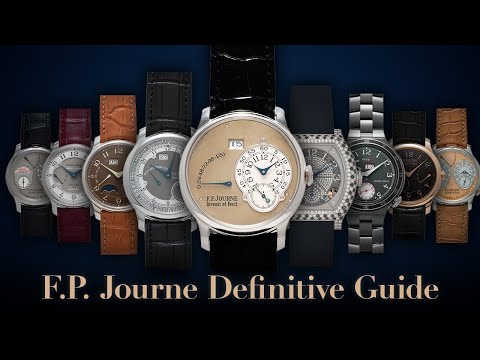
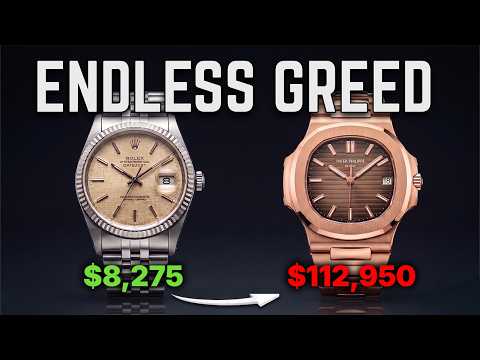
On June 13, 2026, Phillips' New York Watch Auction XIV sold an F.P. Journe Chronomètre à Résonance "Souscription" No. 007 (dated 2000) for $13,922,000, instantly making it the most expensive F.P. Journe ever sold and the most expensive watch by any independent watchmaker ever sold at auction. The piece was one of just 20 "Souscription" watches Journe delivered to the earliest patrons who prepaid to bankroll his tiny atelier in the late 1990s, and this was its first-ever appearance at public auction. The sale anchored a record-shattering $75.8 million two-day total, with all 158 lots selling (100% sell-through) and 16 lots crossing the $1 million mark, making it the highest-grossing watch auction in U.S. history. It capped a historic spring 2026 season for Phillips in which independent watchmakers like Journe repeatedly out-priced storied Swiss maisons such as Patek Philippe and Audemars Piguet. Supporters frame it as vindication: a self-taught, independent watchmaker who once needed subscription financing now sits atop the entire auction market. Skeptics counter that a $13.9 million watch is less a horological verdict than a symptom of scarcity-driven mania among ultra-wealthy collectors, raising the question of whether this reflects genuine artisanal value or a bubble inflated by hype and provenance storytelling.

Poll as Guest Infographics
Similar to hewsay's "The $13.9 Million F.P. Journe Résonance: Proof Independent Watchmaking Has Conquered Horology, or a Speculative Bubble in the Making?"
What skills are needed to learn horology (watch making)? What is the difference between horology and watchmaking (watches)? The field of horology fascinates me and I am genuinely interested in learning about watches, from basic stuff like different types of watch movements to ...
I have always been obsessed with watches and watchmaking. What should I buy for me to start my journey into watchmaking? Then you can start your career either with your own neighbourhood workshop, try to get a job with a watch company, or use your. Then you can start your care...