48% of Americans hope AI cures cancer or Alzheimer's — but only 15% trust the companies building it. Is that optimism justified?
A nationwide survey by AI company Anthropic (nearly 52,000 U.S. respondents) found real hope alongside real distrust: 48% of Americans hope AI helps cure diseases like cancer or Alzheimer's, and 36% think it'll help people with disabilities. But only 15% trust the AI companies actually building this tech to make good decisions about how it's developed and used, and 64% still fear AI-driven job losses. It's a strange split — people want the outcome but don't trust who's delivering it. It comes as real progress keeps landing: this month Merck and Moderna reported a "clinically meaningful" mRNA cancer vaccine result, and AI-assisted drug discovery tools are increasingly credited with speeding up how new treatments get found. Separately, Pew Research's latest survey found scientists remain America's most trusted profession, with 77% of people trusting science overall — suggesting the distrust is aimed at tech companies specifically, not science itself.


Poll as Guest Infographics
Similar to hewsay's "48% of Americans hope AI cures cancer or Alzheimer's — but only 15% trust the companies building it. Is that optimism justified?"
Slovenčina Español (Latinoamérica) Ελληνικά Public Anyone can view, post, and comment to this community 0 0 Home Popular News Explore Best of Reddit Best of Reddit in Portuguese Best of Reddit in German Reddit Rules Privacy Policy User Agr...
What cures have doctors found for cancer? Is there a natural cure for cancer that has been found by a medical doctor? Do most doctors want to find the cure for cancer, or are they getting more money by not having a cure? How is cancer treated by a doctor and cured fully? Havin...
AI just disproved an 80-year-old Erdős math conjecture, verified by a Fields Medalist — but OpenAI's last "Erdős breakthrough" claim was debunked. Real progress or hype cycle?
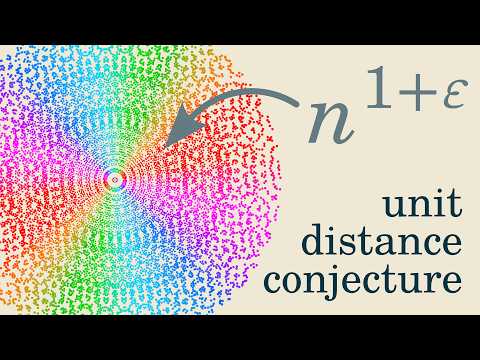
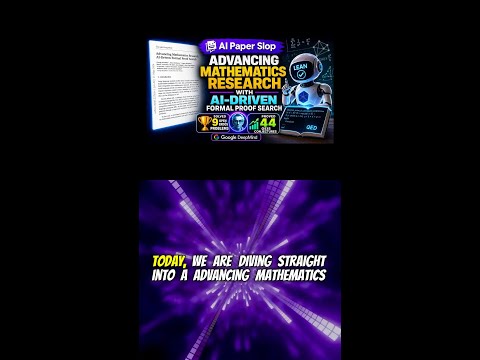
In May 2026, an OpenAI model made an unexpected cross-disciplinary leap: it linked a 1946 Erdős geometry puzzle (how many pairs of points on a plane can sit exactly one unit apart) to a completely unrelated 1964 algebraic number theory result, and used that connection to construct point arrangements beating every approach mathematicians had tried in 80 years — disproving Erdős's conjecture. Nine mathematicians, including Fields Medalist Tim Gowers, reviewed and confirmed the core ideas, calling it "a milestone in AI mathematics." One day later, Google DeepMind's AlphaProof Nexus independently solved nine more open Erdős problems using Lean, a system that checks proofs line by line rather than relying on a human reading them over. The catch: this isn't the first "AI cracks Erdős problems" headline. In October 2025, an earlier OpenAI claim of solving ten Erdős problems was thoroughly debunked by the math community. This time, unlike last time, independent mathematicians verified the work before it was announced.

Poll as Guest Infographics
Similar to hewsay's "AI just disproved an 80-year-old Erdős math conjecture, verified by a Fields Medalist — but OpenAI's last "Erdős breakthrough" claim was debunked. Real progress or hype cycle?"
Prime Numbers from previous Prime Numbers : r/math Skip to main contentPrime Numbers from previous Prime Numbers : r/math Open menu Open navigationGo to Reddit Home r/math A chip A close button Log InLog in to Reddit Expand user menu Open settings menu This subreddit is for di...
Title: Gerd Faltings wins the 2026 Abel Prize! : r/math # Gerd Faltings wins the 2026 Abel Prize! Skip to main contentGerd Faltings wins the 2026 Abel Prize! Open menu Open navigationGo to Reddit Home. Get App Get the Reddit app Log InLog in to Reddit. Expand user menu Open se...