🔥 Featured Questions
The $13.9 Million F.P. Journe Résonance: Proof Independent Watchmaking Has Conquered Horology, or a Speculative Bubble in the Making?

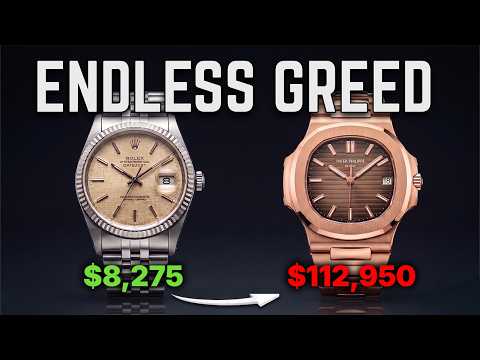
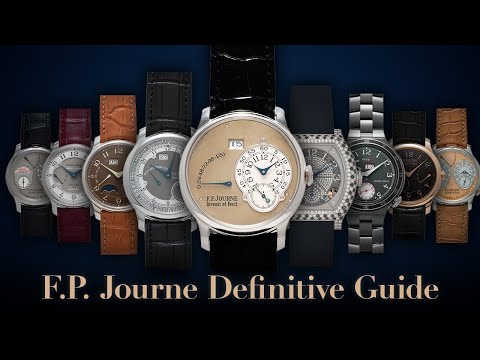
On June 13, 2026, Phillips' New York Watch Auction XIV sold an F.P. Journe Chronomètre à Résonance "Souscription" No. 007 (dated 2000) for $13,922,000, instantly making it the most expensive F.P. Journe ever sold and the most expensive watch by any independent watchmaker ever sold at auction. The piece was one of just 20 "Souscription" watches Journe delivered to the earliest patrons who prepaid to bankroll his tiny atelier in the late 1990s, and this was its first-ever appearance at public auction. The sale anchored a record-shattering $75.8 million two-day total, with all 158 lots selling (100% sell-through) and 16 lots crossing the $1 million mark, making it the highest-grossing watch auction in U.S. history. It capped a historic spring 2026 season for Phillips in which independent watchmakers like Journe repeatedly out-priced storied Swiss maisons such as Patek Philippe and Audemars Piguet. Supporters frame it as vindication: a self-taught, independent watchmaker who once needed subscription financing now sits atop the entire auction market. Skeptics counter that a $13.9 million watch is less a horological verdict than a symptom of scarcity-driven mania among ultra-wealthy collectors, raising the question of whether this reflects genuine artisanal value or a bubble inflated by hype and provenance storytelling.

🗳️ 10 votes so far🏆 Leading: This sale is the ultimate vindication of independent watchmaking as an art form, not just a fashion trend. François-Paul Journe started with nothing but a workbench and a dream, financing his earliest watches through subscription payments from believers willing to bet on his talent before he had a brand name behind him. That a self-made artisan-watchmaker now outranks entire centuries-old maisons like Patek Philippe and Audemars Piguet at auction proves that true horological mastery and authentic craftsmanship ultimately triumph over marketing budgets and brand heritage alone. Collectors aren't paying for a logo; they're paying for a documented piece of horological history and the story of a genius who bet on himself. This is the watch world finally rewarding substance over spectacle, and it should be celebrated as such. (40%)🥈 Strip away the romantic narrative and this sale is really a story about wealth concentration and the financialization of luxury goods, not horology. A watch is fundamentally a device that tells time, the fact that a small circle of billionaires and family offices are now paying eight figures for one says more about where surplus global capital is flowing than about Journe's undeniable mechanical skill. Auction houses like Phillips have strong financial incentives to hype records every season since their fees scale directly with hammer prices, turning watch auctions into a self-reinforcing marketing machine for an increasingly narrow, ultra-wealthy buyer pool. Meanwhile everyday enthusiasts and even loyal Journe collectors get priced further out of a hobby that once prized accessible artisanship, as pieces become trophy assets stored in vaults rather than worn and enjoyed. Celebrating this sale as a horological triumph ignores the uncomfortable truth that it primarily signals inequality and speculative capital allocation, not a democratization or validation of craft. (40%)🥉 A $13.9 million wristwatch is not a rational valuation of engineering, it's a textbook speculative bubble dressed up in horological jargon. Phillips just posted its second record-breaking U.S. auction total in six months, selling every single one of 158 lots and pushing 16 watches past $1 million, a sell-through rate that looks far more like a hype cycle than a stable collectibles market. The pattern mirrors past manias, from vintage Rolex in 2021-2022 to contemporary art, where scarcity narratives and a handful of ultra-wealthy bidders chasing bragging rights inflate prices detached from any use value or historical precedent. When one auction house can shatter a brand's previous record in a single sale, that's not price discovery, it's momentum trading with hairsprings instead of tickers. History suggests these speculative peaks eventually correct, and buyers chasing headline records today may be the ones left holding depreciating investments tomorrow. (20%)⚖️ Split decision🌍 🇨🇳 China, 🇲🇩 Moldova
This sale is the ultimate vindication of independent watchmaking as an art form, not just a fashion trend. François-Paul Journe started with nothing but a workbench and a dream, financing his earliest watches through subscription payments from believers willing to bet on his talent before he had a brand name behind him. That a self-made artisan-watchmaker now outranks entire centuries-old maisons like Patek Philippe and Audemars Piguet at auction proves that true horological mastery and authentic craftsmanship ultimately triumph over marketing budgets and brand heritage alone. Collectors aren't paying for a logo; they're paying for a documented piece of horological history and the story of a genius who bet on himself. This is the watch world finally rewarding substance over spectacle, and it should be celebrated as such.
Strip away the romantic narrative and this sale is really a story about wealth concentration and the financialization of luxury goods, not horology. A watch is fundamentally a device that tells time, the fact that a small circle of billionaires and family offices are now paying eight figures for one says more about where surplus global capital is flowing than about Journe's undeniable mechanical skill. Auction houses like Phillips have strong financial incentives to hype records every season since their fees scale directly with hammer prices, turning watch auctions into a self-reinforcing marketing machine for an increasingly narrow, ultra-wealthy buyer pool. Meanwhile everyday enthusiasts and even loyal Journe collectors get priced further out of a hobby that once prized accessible artisanship, as pieces become trophy assets stored in vaults rather than worn and enjoyed. Celebrating this sale as a horological triumph ignores the uncomfortable truth that it primarily signals inequality and speculative capital allocation, not a democratization or validation of craft.
A $13.9 million wristwatch is not a rational valuation of engineering, it's a textbook speculative bubble dressed up in horological jargon. Phillips just posted its second record-breaking U.S. auction total in six months, selling every single one of 158 lots and pushing 16 watches past $1 million, a sell-through rate that looks far more like a hype cycle than a stable collectibles market. The pattern mirrors past manias, from vintage Rolex in 2021-2022 to contemporary art, where scarcity narratives and a handful of ultra-wealthy bidders chasing bragging rights inflate prices detached from any use value or historical precedent. When one auction house can shatter a brand's previous record in a single sale, that's not price discovery, it's momentum trading with hairsprings instead of tickers. History suggests these speculative peaks eventually correct, and buyers chasing headline records today may be the ones left holding depreciating investments tomorrow.

Poll as Guest Infographics
From around the web

Similar to hewsay's "The $13.9 Million F.P. Journe Résonance: Proof Independent Watchmaking Has Conquered Horology, or a Speculative Bubble in the Making?"

Quoted & linked with attribution — not a hewsay user post.
What skills are needed to learn horology (watch making)? What is the difference between horology and watchmaking (watches)? The field of horology fascinates me and I am genuinely interested in learning about watches, from basic stuff like different types of watch movements to ...
quora.com · Quora
View original
I have always been obsessed with watches and watchmaking. What should I buy for me to start my journey into watchmaking? Then you can start your career either with your own neighbourhood workshop, try to get a job with a watch company, or use your. Then you can start your care...
quora.com · Quora
View original
A $812,500 Sip of History: Was the Record-Shattering 1945 Romanée-Conti Worth More Than a House?

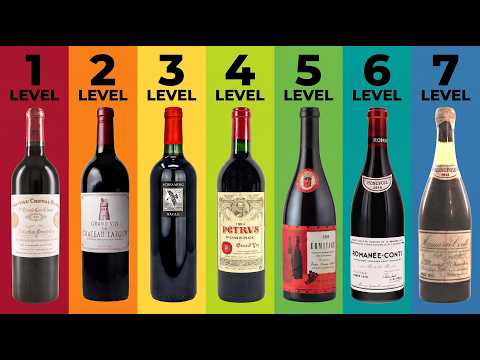
On March 28, 2026, at Acker's three-day La Paulee auction in New York, a single bottle of 1945 Domaine de la Romanee-Conti sold for $812,500, becoming the most expensive bottle of wine ever sold at auction and smashing the previous record of $558,000 set by another bottle from the very same vintage back in 2018. The bottle came from the historic cellar of former DRC co-owner Robert Drouhin and was one of only roughly 600 bottles ever produced of the 1945 vintage, the last harvest from DRC's original pre-phylloxera vines before the domaine was forced to rip them out and replant in 1947. Acker chairman John Kapon, who has personally driven several of the world's top wine auction records, called it the greatest wine that I have ever tasted. The broader three-day sale grossed more than $25 million and set 460 individual auction records, underscoring just how much money is still chasing trophy Burgundy even as parts of the broader fine-wine investment market have cooled over 2025-2026. Critics point out that a wine this old is essentially undrinkable as a beverage and functions purely as a speculative collectible, while skeptics also flag the notorious risk of counterfeiting in a market where provenance can rarely be fully verified.
🗳️ 10 votes so far🏆 Leading: This sale is a once-in-history moment of pure scarcity value, not hype. The 1945 vintage came from Domaine de la Romanee-Conti's original, pre-phylloxera vines, which were destroyed and replanted in 1947, meaning no wine like it can ever be made again, from those exact vines, in that exact soil, under those exact wartime conditions. Only around 600 bottles were produced, and each surviving bottle represents a tangible link to a domaine widely regarded as the pinnacle of Burgundian winemaking. John Kapon, one of the most experienced palates in the fine-wine world, called it the greatest wine he had ever tasted, suggesting the liquid inside genuinely justifies reverence beyond just the label. When something is truly irreplaceable, a finite, non-renewable piece of agricultural and cultural history, a price tag in the hundreds of thousands isn't absurd, it's simply what true rarity costs. (40%)🥈 Strip away the romance and this is a speculative asset trade, not a wine purchase. An 81-year-old bottle of wine is almost certainly undrinkable or at best a shadow of its former self, meaning buyers aren't purchasing an experience, they're purchasing a trophy asset expected to appreciate, exactly like a rare painting or a numbered sneaker. The fact that this same vintage broke its own record just eight years after the last record, $558,000 in 2018 to $812,500 in 2026, shows a market where price is driven by auction momentum and bragging rights among a tiny circle of ultra-wealthy collectors, not by any real change in the wine itself. Add in the well-documented history of counterfeit old and rare bottles flooding the collector market, and buyers are effectively betting six figures on provenance paperwork as much as on the wine. This looks less like connoisseurship and more like a rarefied casino for people who already have everything. (40%)🥉 A $812,500 bottle of wine is a glaring symbol of how disconnected fine wine culture has become from the people who actually make and love it. While a single collector drops nearly a million dollars on one bottle to sip or simply display, ordinary wine lovers and even working sommeliers can never taste, let alone own, anything close to a top vintage from a producer like DRC, pricing an entire tier of winemaking excellence out of reach for anyone but the ultra-rich. Auctions like this one, which generated over $25 million and set 460 records in a single event, reinforce fine wine's reputation as an exclusive playground rather than a shared cultural tradition rooted in food, land, and community. Critics argue that when headline sales become about record-chasing and status display, they distort the broader market and public perception of wine, making it seem like something to be hoarded and speculated on rather than opened and enjoyed. Defenders of accessible wine culture see moments like this as exactly what's wrong with treating agricultural craft as a luxury commodity. (20%)⚖️ Split decision🌍 🇨🇳 China, 🇹🇳 Tunisia
A $812,500 bottle of wine is a glaring symbol of how disconnected fine wine culture has become from the people who actually make and love it. While a single collector drops nearly a million dollars on one bottle to sip or simply display, ordinary wine lovers and even working sommeliers can never taste, let alone own, anything close to a top vintage from a producer like DRC, pricing an entire tier of winemaking excellence out of reach for anyone but the ultra-rich. Auctions like this one, which generated over $25 million and set 460 records in a single event, reinforce fine wine's reputation as an exclusive playground rather than a shared cultural tradition rooted in food, land, and community. Critics argue that when headline sales become about record-chasing and status display, they distort the broader market and public perception of wine, making it seem like something to be hoarded and speculated on rather than opened and enjoyed. Defenders of accessible wine culture see moments like this as exactly what's wrong with treating agricultural craft as a luxury commodity.

Poll as Guest Infographics
From around the web

Similar to hewsay's "A $812,500 Sip of History: Was the Record-Shattering 1945 Romanée-Conti Worth More Than a House?"

Quoted & linked with attribution — not a hewsay user post.
* Marginal utility: adding a bedroom typically increases market value because it raises functional utility (more occupants, home office, guest room, rental potential). * Marginal utility: adding a bedroom typically increases market value because it raises functional utility (m...
quora.com · Quora
View original
Title: Reddit - The heart of the internet # jaystats2. ## Is Ryan Gosling the next Tom Hanks? Hanks’ range and delivery is superior to Gosling’s. ## If you were granted a wish for any single piece of movie memorabilia, what would it be? Really appreciate everyone taking the ti...
reddit.com · Reddit
View original