The Simulation Hypothesis: are we living inside someone else's computer, and could we ever actually prove it?
In 2003, philosopher Nick Bostrom published an argument that sounds like science fiction but is taken seriously by physicists and philosophers alike: if advanced civilizations can eventually run detailed "ancestor simulations" of their own history, and if they'd plausibly run many of them, then statistically almost all minds like ours are more likely to be simulated than "real." He called it a trilemma — either civilizations never reach that technology, they choose never to run such simulations, or we are almost certainly living inside one right now.
The idea exploded into pop culture after Elon Musk endorsed it in 2016, arguing that video games have gone from Pong to photorealistic VR in decades, so the odds we're at the ceiling of that progression rather than somewhere along it are tiny. Some physicists even proposed real tests — looking for a kind of "pixelation" or lattice-like signature in high-energy cosmic ray data, the digital equivalent of noticing the render distance in a video game.
Critics call the whole framework unfalsifiable — a clever thought experiment dressed up as science, since no observation could ever conclusively rule it in or out. So: serious hypothesis about reality, or a very elaborate philosophical trick?

 🏆 Leading: It's plausible and deserves to be taken seriously. Bostrom's argument isn't "we're probably in a simulation" as a vibe — it's a statistical claim that follows directly from two fairly modest assumptions: that civilizations can eventually build simulations detailed enough to contain conscious minds, and that at least some of them would choose to run many. If both hold even loosely, the math tips overwhelmingly toward simulated minds outnumbering "base reality" minds by orders of magnitude, the same way there are vastly more copies of a popular video game running on players' consoles than there are original master copies at the studio.
Our own trajectory backs this up: we've gone from text-based games to photorealistic, physically simulated worlds in under fifty years, and we're already running detailed physics and climate simulations of the real world. Dismissing the hypothesis outright requires assuming either that conscious simulation is physically impossible forever, or that no advanced civilization would ever bother — both much stronger, harder-to-defend claims than the hypothesis itself. (36%)
 🥈 It's unfalsifiable pseudo-philosophy, not real science. A hypothesis earns scientific standing by making a prediction that could, in principle, come out false. The simulation hypothesis fails that test by design: whatever we observe, a sufficiently advanced simulation could produce, which means no experiment could ever disprove it. The proposed "tests," like looking for pixelation patterns in cosmic ray data, don't actually solve this — even a null result just means the simulation (if it exists) is running at a resolution too fine for us to detect, which is an unfalsifiable escape hatch, not a real prediction.
That's the same structural problem philosophers have flagged in other untestable metaphysical claims for centuries, going back to Descartes' evil demon and older skeptical scenarios — dressed up this time in the language of computer science instead of theology. It's a genuinely fun thought experiment about the limits of knowledge, but calling it a serious scientific hypothesis, rather than modern philosophy wearing a lab coat, oversells what it can actually deliver. (36%)
 🥉 Even if it's true, it wouldn't actually change anything. Grant Bostrom the whole argument — suppose we really are inside someone else's simulation. What would you do differently tomorrow morning? You'd still need to eat, still feel pain, still love the people around you, and gravity would still pull you toward the floor exactly as hard as it did before you knew. The hypothesis is metaphysically dramatic but practically inert: it doesn't generate a single testable prediction that changes how physics, medicine, or ethics actually get done day to day.
That's not a knock against thinking about it — it's a genuinely interesting way to explore what "reality" even means, alongside older ideas like Descartes' demon or Putnam's brain-in-a-vat. But there's a real difference between an idea being philosophically fascinating and it being actionable. Until the simulation hypothesis produces a prediction that could actually be tested and acted on, treating it as a live practical question — rather than a fascinating thought experiment — is arguably its own kind of overreach. (27%)⚖️ Split decision🌍 🇨🇳 China
Poll as Guest Infographics
Similar to hewsay's "The Simulation Hypothesis: are we living inside someone else's computer, and could we ever actually prove it?"
Are we living in a simulation, I feel like that I'm the only who's really conscious is that true? I think a more intuitive way to get this point (if I’m understanding it correctly) is to flip it and re-phrase it that “the fraction of all people with our kind of experiences tha...
Do you think that with Thomas Campbell's new experiments, he can somehow prove the simulation hypothesis? In the real world (or the simulation that we think is the real world) we don’t know what it should be. The assumption of the hypothesis is that what WE experience could be...
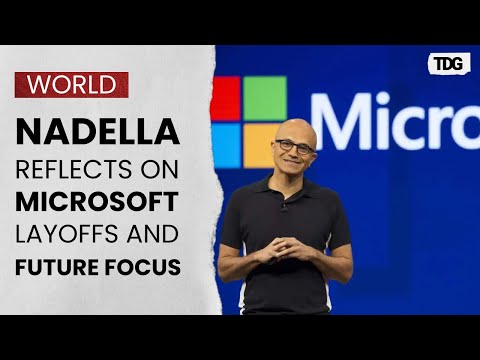
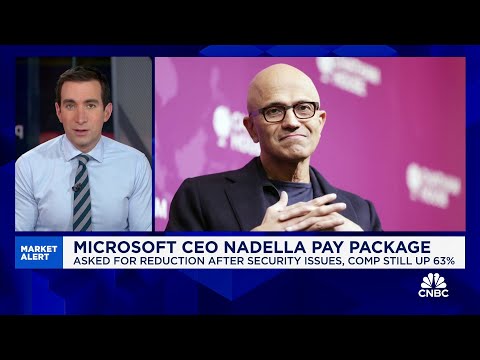
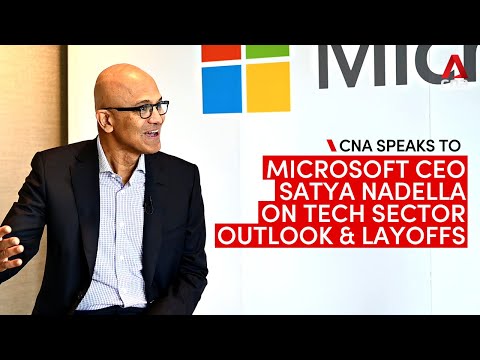
Satya Nadella's $96.5M Pay Raise After 15,000+ Microsoft Layoffs: AI Success Story or Broken Trust With Workers?
In a July 2025 internal memo, Microsoft CEO Satya Nadella told employees that the year's layoffs, which ultimately cut more than 15,000 jobs across gaming, security, and management, were "weighing heavily on me," calling the contradiction between record profits and mass cuts the "enigma of success." Months later, proxy filings showed Nadella's fiscal 2025 compensation climbed 22% to a record $96.5 million ($2.5M salary, roughly $9.5M cash bonus, about $84M in stock awards), tied to metrics including Azure and cloud revenue growth as Microsoft's cloud business hit roughly $169 billion (up 23%) and Azure topped $75 billion (up 34%). Former Microsoft HR vice president Chris Williams called it an "accountability issue," saying the optics of a massive CEO pay raise while thousands of employees lose their jobs undermines trust, while Microsoft noted that 10,000 laid-off employees cost roughly $1 billion annually, far more than trimming Nadella's pay could offset. As of today, financial outlets are still revisiting the pay-versus-layoffs math even as Nadella pushes an AI-driven "smarter, leaner" workforce vision, with Microsoft's CEO-to-median-worker pay ratio now near 480-to-1.

Poll as Guest Infographics
Similar to hewsay's "Satya Nadella's $96.5M Pay Raise After 15,000+ Microsoft Layoffs: AI Success Story or Broken Trust With Workers?"
What is the difference between Bill Gates' Microsoft and Satya Nadella's Microsoft? How has Microsoft changed under Satya Nadella? All this economic surge possible to Microsoft not only because Satya Nadella took over as CEO but also the foundation laid by Bill Gates and Steve...
What was wrong with Microsoft before Satya Nadella joined the company? How has Microsoft changed under Satya Nadella? All this economic surge possible to Microsoft not only because Satya Nadella took over as CEO but also the foundation laid by Bill Gates and Steve Ballmer. How...