🔥 Featured Questions
Michelin Strips Alinea, Masa, and The Inn at Little Washington of Their Third Star in One Night — Overdue Correction or Reckless Power Play?

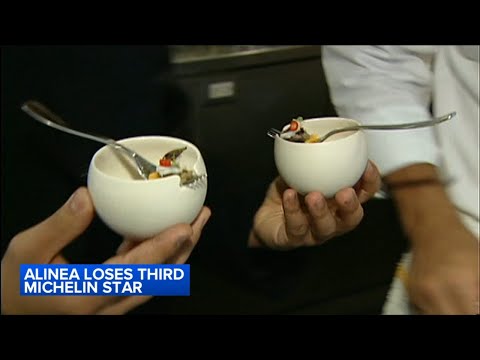
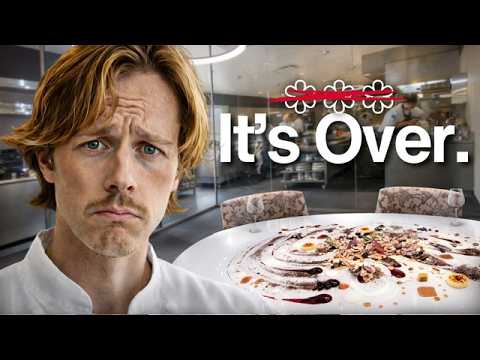
On November 12, 2025, the Michelin Guide quietly triggered one of the biggest shocks in modern American fine dining when three of the country's most storied three-star restaurants, Alinea in Chicago, Masa in New York, and The Inn at Little Washington in Virginia, were all simultaneously downgraded to two stars ahead of the official November 18 ceremony in Philadelphia. Alinea co-owner and chef Grant Achatz broke the news himself on Instagram days before Michelin's own reveal, posting that they were disappointed to learn of their demotion, a message that racked up more than 14,500 likes within hours. Michelin offered no specific public explanation, citing only its standard criteria, leaving Smyth as Chicago's sole remaining three-star restaurant and shrinking the entire US three-star club to just 14 restaurants. The timing was especially charged: the downgrade landed during Alinea's 20th-anniversary global pop-up tour and followed recent lukewarm reviews questioning whether its modernist cuisine still felt cutting-edge, while Masa, famous for a tasting menu that runs $1,000-plus per person, lost its star despite that eye-watering price tag. Food media split immediately: some called it a necessary reset proving Michelin actually enforces its standards, while others accused Michelin of a calculated shock tactic to reassert its own authority and relevance.
🏆 Leading: Michelin's decision reeks of an opaque, unaccountable process making sweeping judgments with zero real explanation, just vague boilerplate about ingredient quality and consistency that could apply to literally any restaurant on earth. Alinea spent twenty years redefining American fine dining and training a generation of chefs, and Grant Achatz's stunned public response shows even the restaurant's own team had no real warning or specific feedback to act on. A handful of anonymous inspector visits deciding the fate of an institution this significant, without transparency into what actually went wrong, is the definition of an out-of-touch, unaccountable elite passing judgment from behind a curtain. If Michelin genuinely believed the food had declined, owing these restaurants, and the public, a real explanation isn't optional, it's the bare minimum for an institution that claims this much authority over careers and livelihoods. (43%)🥈 This wasn't really about the food on the plate, it was a marketing maneuver designed to remind the industry that no restaurant, however famous, is bigger than Michelin itself. Striking down Alinea, Masa, and The Inn at Little Washington in the same announcement, timed just before a splashy Philadelphia ceremony, generated exactly the kind of shockwave headlines that keep the guide culturally relevant amid persistent accusations that its city selections are influenced by tourism-board funding. Grant Achatz's decision to leak the news himself on Instagram before Michelin's own reveal only underscores how adversarial this relationship has become, with a top chef effectively hijacking the guide's narrative rather than trusting it to be handled fairly. When an institution with this much unchecked commercial and cultural power can end a restaurant's three-star era with a one-line statement and no accountability, the integrity of the whole rating system deserves far more scrutiny than the restaurants it just demoted. (43%)🥉 Michelin did exactly what it should: enforce its own standards without sentimentality, even against beloved icons. A three-star rating is supposed to mean a restaurant is worth a special journey today, not a lifetime achievement award for what it accomplished a decade ago, and recent reviews had already begun questioning whether Alinea's modernist tricks still felt fresh twenty years on. Masa charging over $1,000 a head does not entitle it to permanent immunity from scrutiny, if anything, that price makes consistency non-negotiable, and Michelin clearly found lapses worth flagging. Letting three restaurants coast indefinitely on reputation would have made the entire three-star tier meaningless and eroded trust in the guide for everyone, from first-time diners to serious gourmands. This wasn't a scandal, it was Michelin's credibility check working as intended, however painful for the chefs involved. (14%)🌍 🇨🇳 China
Michelin's decision reeks of an opaque, unaccountable process making sweeping judgments with zero real explanation, just vague boilerplate about ingredient quality and consistency that could apply to literally any restaurant on earth. Alinea spent twenty years redefining American fine dining and training a generation of chefs, and Grant Achatz's stunned public response shows even the restaurant's own team had no real warning or specific feedback to act on. A handful of anonymous inspector visits deciding the fate of an institution this significant, without transparency into what actually went wrong, is the definition of an out-of-touch, unaccountable elite passing judgment from behind a curtain. If Michelin genuinely believed the food had declined, owing these restaurants, and the public, a real explanation isn't optional, it's the bare minimum for an institution that claims this much authority over careers and livelihoods.
This wasn't really about the food on the plate, it was a marketing maneuver designed to remind the industry that no restaurant, however famous, is bigger than Michelin itself. Striking down Alinea, Masa, and The Inn at Little Washington in the same announcement, timed just before a splashy Philadelphia ceremony, generated exactly the kind of shockwave headlines that keep the guide culturally relevant amid persistent accusations that its city selections are influenced by tourism-board funding. Grant Achatz's decision to leak the news himself on Instagram before Michelin's own reveal only underscores how adversarial this relationship has become, with a top chef effectively hijacking the guide's narrative rather than trusting it to be handled fairly. When an institution with this much unchecked commercial and cultural power can end a restaurant's three-star era with a one-line statement and no accountability, the integrity of the whole rating system deserves far more scrutiny than the restaurants it just demoted.
Michelin did exactly what it should: enforce its own standards without sentimentality, even against beloved icons. A three-star rating is supposed to mean a restaurant is worth a special journey today, not a lifetime achievement award for what it accomplished a decade ago, and recent reviews had already begun questioning whether Alinea's modernist tricks still felt fresh twenty years on. Masa charging over $1,000 a head does not entitle it to permanent immunity from scrutiny, if anything, that price makes consistency non-negotiable, and Michelin clearly found lapses worth flagging. Letting three restaurants coast indefinitely on reputation would have made the entire three-star tier meaningless and eroded trust in the guide for everyone, from first-time diners to serious gourmands. This wasn't a scandal, it was Michelin's credibility check working as intended, however painful for the chefs involved.

Poll as Guest Infographics
From around the web

Similar to hewsay's "Michelin Strips Alinea, Masa, and The Inn at Little Washington of Their Third Star in One Night — Overdue Correction or Reckless Power Play?"

Quoted & linked with attribution — not a hewsay user post.
# Alinea, Masa, and the Inn at Little Washington Have All Lost Their Third Michelin Star. r/finedining - Alinea, Masa, and the Inn at Little Washington Have All Lost Their Third Michelin Star. Michelin warned the restaurants this was going to happen at the upcoming ceremony an...
reddit.com · Reddit
View original
304K Members 33 Online ### Disappearance of 2-starred and 3-starred restaurants from Japan's Michelin guides 65 upvotes ·36 comments * Michelin star restaurants in Tokyo and Kyoto.: r/JapanTravel icon r/JapanTravel•7 yr. 3.4M Members 63 Online ### Michelin star restaurants in ...
reddit.com · Reddit
View original
Scientists just "de-extincted" the dire wolf. Which species should be revived next?

In April 2025, Colossal Biosciences announced the birth of three gray wolf pups genetically edited (20 edits across 14 genes) using ancient DNA from a 13,000-year-old tooth and a 72,000-year-old skull to resemble dire wolves, which went extinct about 12,500 years ago. Critics argue this is really just a modified gray wolf, not a true resurrection, since dire wolves are genetically quite distant relatives. Colossal is also chasing the woolly mammoth, the dodo, and the thylacine (Tasmanian tiger), backed by billions in funding. If you could pick one extinct species to bring back with this technology, which one would you choose, and why?

🗳️ 11 votes so far🏆 Leading: Thylacine (Tasmanian Tiger)

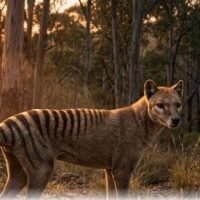
The thylacine, or Tasmanian tiger, was the largest carnivorous marsupial of modern times until the last known individual died in Hobart Zoo in 1936, decades after bounty hunting for allegedly killing livestock drove the species to collapse. Colossal Biosciences and University of Melbourne researchers are using the fat-tailed dunnart, a mouse-sized marsupial, as a genetic template, guided by an unusually well-preserved thylacine genome extracted from a juvenile specimen kept in ethanol. Because marsupials give birth to tiny, underdeveloped young that finish growing in a pouch, some scientists argue thylacine revival is technically more feasible than mammoth or dodo projects, though still years away.
(55%)

🥈 Woolly Mammoth

Colossal Biosciences is genetically engineering Asian elephants — their closest living relative — to express mammoth traits like dense fur, thick fat layers, and small ears suited to Arctic cold, using ancient DNA recovered from frozen specimens. The company aims to birth the first calves by 2028 and eventually rewild herds across Siberian tundra, arguing mammoths once trampled trees and compacted snow in ways that kept permafrost frozen, slowing carbon release. Critics counter that the result is really a cold-adapted elephant hybrid, not a true mammoth, and question whether Arctic ecosystems and elephant surrogate mothers are ready for the experiment.
(18%)

🥉 None of these — leave extinction alone

Not every scientist — or voter — is convinced de-extinction is worth pursuing. Skeptics point out that roughly one million species are currently at risk of extinction according to UN estimates, and argue the tens of millions of dollars Colossal has raised would save far more biodiversity if spent on habitat protection and anti-poaching efforts instead. There's also a scientific objection: these projects don't produce genetically identical originals, just edited hybrids of living relatives, so calling it 'de-extinction' may overstate what's actually happening. Ecosystems have also changed dramatically since these species vanished, raising questions about whether revived animals could even survive, let alone thrive, in the modern world.
(18%)
🌍 🇨🇳 China

Poll as Guest Infographics
From around the web

Similar to hewsay's "Scientists just "de-extincted" the dire wolf. Which species should be revived next?"

Quoted & linked with attribution — not a hewsay user post.
Scientists have genetically engineered wolves with white hair like the extinct dire wolf. What other animals do you expect scientists to bring back from extinction? It’s actually quite important we don’t go around telling people that dire wolves have been brought back from ext...
quora.com · Quora
View original
IUCN Canid Specialist Group statement on Colossal "Dire Wolves" : r/Paleontology. Skip to main contentIUCN Canid Specialist Group statement on Colossal "Dire Wolves" : r/Paleontology. IUCN Canid Specialist Group statement on Colossal "Dire Wolves". Colossal convinced thousands...
reddit.com · Reddit
View original