πŸ”₯ Featured Questions
The toilet paper "over or under" debate has a 134-year-old answer hiding in a Victorian patent β€” do you actually hang it the "correct" way, or does it just not matter?

In 1891, inventor Seth Wheeler patented the modern perforated toilet paper roll β€” and his own patent diagram clearly shows the paper hanging over the front of the roll, not under. That's been cited for decades as the definitive answer to one of the dumbest fights every household has. Team Under has its own defenses though: it's supposedly better for keeping curious cats and toddlers from unrolling the whole thing, and quieter in wall-mounted holders that rattle. Meanwhile a growing share of people just want everyone to relax about a roll of paper. Where do you land?


Poll as Guest Infographics
From around the web

Similar to hewsay's "The toilet paper "over or under" debate has a 134-year-old answer hiding in a Victorian patent β€” do you actually hang it the "correct" way, or does it just not matter?"

Quoted & linked with attribution — not a hewsay user post.
Why do people argue about what direction the roll of toilet paper faces? I have a cat, and if my cat were to reach up and pull down on the toilet paper all the time like so many do, I’d turn the roll the other way. Originally Answered: Why does it matter which way the toilet p...
quora.com · Quora
View original
So, literally thousand’s of resort hotels have clearly determined that toilet paper must be hung OVER the roll and not under - because it’s the right way! Try other ways to make money on freecash. You try new apps or services, scroll around, share your thoughts, and the next t...
quora.com · Quora
View original
Kimi Antonelli, 19, Is F1's Youngest-Ever Points Leader Heading Into the Second Half of 2026 β€” Genuine Great or Beneficiary of a Broken Rulebook?

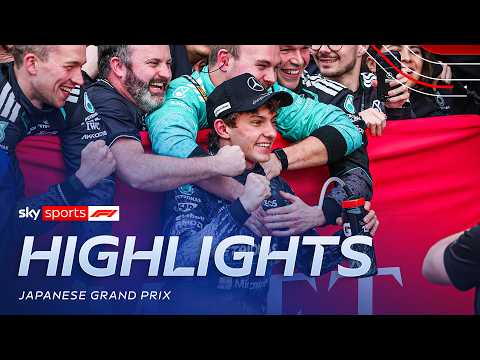
Mercedes rookie Kimi Antonelli became the youngest championship leader in Formula 1 history after winning the 2026 Japanese Grand Prix on March 29, crossing the line 13 seconds clear of Oscar Piastri for his second consecutive victory following a win in China. Heading into the summer break after Hungary, the 19-year-old Italian has stretched that advantage into a commanding lead, roughly 50 points clear of seven-time champion Lewis Hamilton at Ferrari, 59 clear of his own Mercedes teammate George Russell, and 91 clear of reigning champion Lando Norris. The story is inseparable from F1's biggest regulation overhaul in a generation: all-new 2026 chassis and power-unit rules have scrambled the competitive order, and nobody has fallen further than Max Verstappen and Red Bull, who are nowhere near the top five after four straight titles. Verstappen has repeatedly torched the new rules in public, calling the racing under them terrible, political, really a joke. Meanwhile Mercedes has built the fastest car of the opening rounds, fueling arguments that Antonelli's rise says as much about engineering as about driving talent. History offers a warning against crowning him too soon, Verstappen overturned a 46-point deficit in 2022, and Hamilton and Vettel have both erased 29-42 point gaps in title fights before.
πŸ† Leading: Strip away the hype and this is fundamentally a story about Mercedes nailing the 2026 rulebook better than anyone else, not about a teenager suddenly becoming F1's best driver. The numbers make it undeniable: Mercedes held a huge points advantage over Ferrari and McLaren in the constructors' standings after just three rounds, meaning both of its drivers were set up to dominate regardless of who was behind the wheel. The real headline of 2026 isn't Antonelli, it's that the sport's new active-aero, hybrid regulations completely inverted the competitive order and buried a four-time champion team overnight, with Max Verstappen reduced to calling the racing terrible, political, really a joke and comparing the cars to Mario Kart. When an entire dynasty like Red Bull can fall out of the top five in one regulation cycle, it exposes how much of modern F1 success is engineering and rule-writing rather than driving. Crowning a 19-year-old the greatest young talent ever while ignoring that he's driving the fastest car on the grid by a mile is exactly the kind of narrative F1 loves to oversimplify. (60%)πŸ₯ˆ Antonelli isn't a beneficiary of circumstance, he's the real deal, a generational talent who has been fast-tracked through junior categories his whole career and is now proving it on F1's biggest stage in only his second full season. Back-to-back wins in China and Japan, including a 13-second demolition of Piastri, show race-craft and composure that don't come from a car alone; teammates and rivals in equal machinery don't just accidentally become the youngest points leader in the sport's history. Mercedes boss Toto Wolff has publicly said he believes Antonelli is absolutely world champion material, and the team itself has pointed to his maturity and self-belief as the real drivers of his form, not just the Red Bull car's struggles. Skeptics love to credit the car, but Antonelli is out-scoring his own teammate George Russell in an identical Mercedes by nearly 60 points, that gap is driver, not machinery. Betting markets shifted dramatically in his favor after China and Japan specifically because insiders recognized this wasn't a fluke streak but a changing of the guard. (40%)🌍 πŸ‡¨πŸ‡³ China
Strip away the hype and this is fundamentally a story about Mercedes nailing the 2026 rulebook better than anyone else, not about a teenager suddenly becoming F1's best driver. The numbers make it undeniable: Mercedes held a huge points advantage over Ferrari and McLaren in the constructors' standings after just three rounds, meaning both of its drivers were set up to dominate regardless of who was behind the wheel. The real headline of 2026 isn't Antonelli, it's that the sport's new active-aero, hybrid regulations completely inverted the competitive order and buried a four-time champion team overnight, with Max Verstappen reduced to calling the racing terrible, political, really a joke and comparing the cars to Mario Kart. When an entire dynasty like Red Bull can fall out of the top five in one regulation cycle, it exposes how much of modern F1 success is engineering and rule-writing rather than driving. Crowning a 19-year-old the greatest young talent ever while ignoring that he's driving the fastest car on the grid by a mile is exactly the kind of narrative F1 loves to oversimplify.
Antonelli isn't a beneficiary of circumstance, he's the real deal, a generational talent who has been fast-tracked through junior categories his whole career and is now proving it on F1's biggest stage in only his second full season. Back-to-back wins in China and Japan, including a 13-second demolition of Piastri, show race-craft and composure that don't come from a car alone; teammates and rivals in equal machinery don't just accidentally become the youngest points leader in the sport's history. Mercedes boss Toto Wolff has publicly said he believes Antonelli is absolutely world champion material, and the team itself has pointed to his maturity and self-belief as the real drivers of his form, not just the Red Bull car's struggles. Skeptics love to credit the car, but Antonelli is out-scoring his own teammate George Russell in an identical Mercedes by nearly 60 points, that gap is driver, not machinery. Betting markets shifted dramatically in his favor after China and Japan specifically because insiders recognized this wasn't a fluke streak but a changing of the guard.

Poll as Guest Infographics
From around the web

Similar to hewsay's "Kimi Antonelli, 19, Is F1's Youngest-Ever Points Leader Heading Into the Second Half of 2026 β€” Genuine Great or Beneficiary of a Broken Rulebook?"

Quoted & linked with attribution — not a hewsay user post.
Kimi Antonelli becomes the 2nd youngest. With only six races completed, Kimi Antonelli has already beaten his total points score from last
reddit.com · Reddit
View original