Artemis II's Historic Lunar Flyby: Was NASA's $90 Billion Return to the Moon a Giant Leap or a Costly Detour?
On April 1, 2026, NASA launched Artemis II from Kennedy Space Center aboard the Space Launch System rocket, sending astronauts Reid Wiseman, Victor Glover, Christina Koch, and Canadian Jeremy Hansen on a roughly 10-day free-return trajectory around the Moon, the first crewed lunar mission in over 50 years since Apollo 17 in 1972. The Orion capsule carried the crew farther from Earth than any humans since Apollo, looping around the far side of the Moon without landing, before splashing down safely off the California coast on April 11, 2026. The mission notched several firsts: Christina Koch became the first woman to fly beyond low Earth orbit, Victor Glover the first Black astronaut to do so, and Jeremy Hansen the first non-American to leave low Earth orbit. It followed years of delays and ballooning costs, with critics citing the broader Artemis program's roughly $90 billion price tag, even as polls found about 97% of Americans still supported the program. The flight is widely framed as the opening act of a new US-China lunar race, with NASA officials openly warning China could land its own astronauts on the Moon before the US completes its planned Artemis III landing later this decade.


Poll as Guest Infographics
Similar to hewsay's "Artemis II's Historic Lunar Flyby: Was NASA's $90 Billion Return to the Moon a Giant Leap or a Costly Detour?"
April 6, 2026 - The Artemis II crew has begun the historic flyby of the moon, marking the first time humans have seen the far side of the lunar surface. ... I believe it should have been “the entire far side of the lunar surface in one viewing” (or similar), due to Artemis II’...
April 1, 2026 - Humanity is headed back to the lunar surface for the first time in more than a half century — but first, a flyby. Four astronauts will orbit the moon during NASA's Artemis II mission , set to launch the Orion spacecraft from the agency's Kennedy Space Center in...
Scientists just "de-extincted" the dire wolf. Which species should be revived next?
In April 2025, Colossal Biosciences announced the birth of three gray wolf pups genetically edited (20 edits across 14 genes) using ancient DNA from a 13,000-year-old tooth and a 72,000-year-old skull to resemble dire wolves, which went extinct about 12,500 years ago. Critics argue this is really just a modified gray wolf, not a true resurrection, since dire wolves are genetically quite distant relatives. Colossal is also chasing the woolly mammoth, the dodo, and the thylacine (Tasmanian tiger), backed by billions in funding. If you could pick one extinct species to bring back with this technology, which one would you choose, and why?

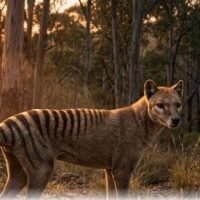 🏆 Leading: Thylacine (Tasmanian Tiger)
The thylacine, or Tasmanian tiger, was the largest carnivorous marsupial of modern times until the last known individual died in Hobart Zoo in 1936, decades after bounty hunting for allegedly killing livestock drove the species to collapse. Colossal Biosciences and University of Melbourne researchers are using the fat-tailed dunnart, a mouse-sized marsupial, as a genetic template, guided by an unusually well-preserved thylacine genome extracted from a juvenile specimen kept in ethanol. Because marsupials give birth to tiny, underdeveloped young that finish growing in a pouch, some scientists argue thylacine revival is technically more feasible than mammoth or dodo projects, though still years away. (50%)
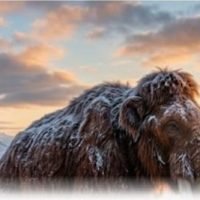 🥈 Woolly Mammoth
Colossal Biosciences is genetically engineering Asian elephants — their closest living relative — to express mammoth traits like dense fur, thick fat layers, and small ears suited to Arctic cold, using ancient DNA recovered from frozen specimens. The company aims to birth the first calves by 2028 and eventually rewild herds across Siberian tundra, arguing mammoths once trampled trees and compacted snow in ways that kept permafrost frozen, slowing carbon release. Critics counter that the result is really a cold-adapted elephant hybrid, not a true mammoth, and question whether Arctic ecosystems and elephant surrogate mothers are ready for the experiment. (17%)
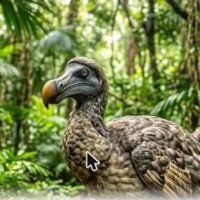 🥉 Dodo
The dodo has become de-extinction's most symbolic target: a flightless pigeon relative wiped out within decades of sailors reaching Mauritius in the 1600s, purely through hunting and introduced predators. Colossal Biosciences has sequenced dodo DNA from museum specimens and is using the Nicobar pigeon, its nearest living relative, to identify the genetic differences worth engineering back in. Because bird embryos develop inside hard-shelled eggs, scientists can't clone them like mammals — instead they plan to edit primordial germ cells and transplant them into surrogate birds. Success would let Mauritius reintroduce a living dodo to forests it vanished from centuries ago. (17%)🌍 🇨🇳 China
Poll as Guest Infographics
Similar to hewsay's "Scientists just "de-extincted" the dire wolf. Which species should be revived next?"
Scientists have genetically engineered wolves with white hair like the extinct dire wolf. What other animals do you expect scientists to bring back from extinction? It’s actually quite important we don’t go around telling people that dire wolves have been brought back from ext...
IUCN Canid Specialist Group statement on Colossal "Dire Wolves" : r/Paleontology. Skip to main contentIUCN Canid Specialist Group statement on Colossal "Dire Wolves" : r/Paleontology. IUCN Canid Specialist Group statement on Colossal "Dire Wolves". Colossal convinced thousands...