🔥 Featured Questions
The Most Inspiring Speech Ever Delivered: MLK's I Have a Dream, Steve Jobs Stanford Address, or JFK Moonshot Call - Which Oratory Changed the World Most?

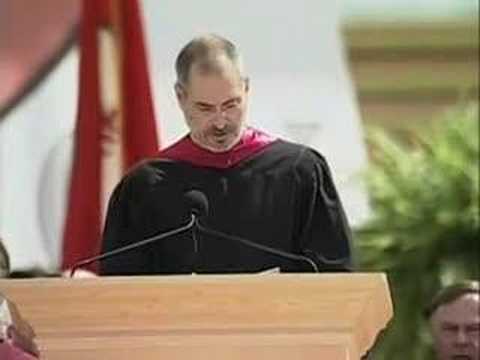
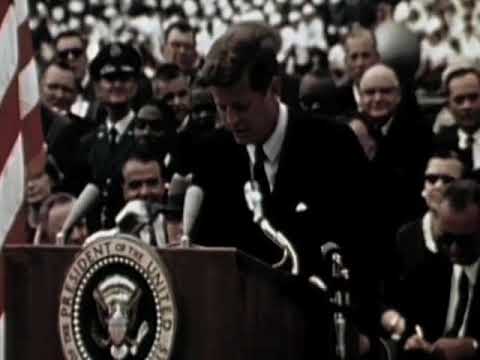
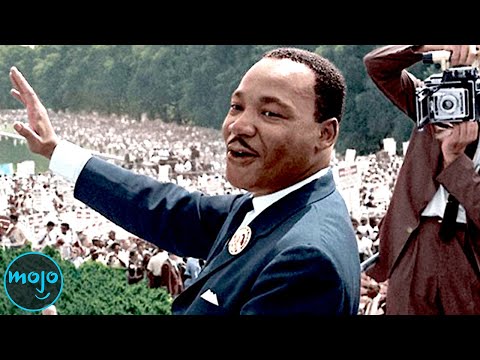
Rhetoric that moves history takes many forms: the moral appeal of a civil-rights leader, the intimate wisdom of a dying entrepreneur, or the collective call to arms of a president. Martin Luther King Jr.'s I Have a Dream speech at the 1963 March on Washington used biblical cadence and repetition to reframe a civil-rights struggle as a moral test for the whole nation, and it remains one of the most quoted speeches in history. Steve Jobs' 2005 Stanford commencement address, built around three simple stories about dropping out, getting fired, and facing death, has become the most-watched graduation speech ever and shaped how a generation thinks about purpose and risk. JFK's 1962 We Choose to Go to the Moon speech at Rice University turned an abstract, expensive science program into a shared national mission, built on the line we choose to do these things not because they are easy, but because they are hard. Which of these speeches actually changed the most minds, and does moral, personal, or civic inspiration move people more?
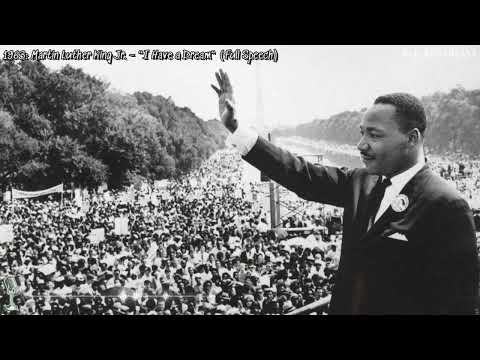
🏆 Leading: Martin Luther King Jr.'s I Have a Dream speech, delivered to roughly 250,000 people at the Lincoln Memorial on August 28, 1963, is often ranked as the greatest speech in American history for its moral clarity, its use of repetition and biblical rhythm, and the way it helped shift public opinion behind the Civil Rights Act of 1964. Its lines are still quoted by leaders across the political spectrum more than six decades later, arguably making it the most enduring and widely inspiring speech of the modern era. (50%)🥈 Steve Jobs' 2005 Stanford commencement address is arguably the most personally inspiring speech of the internet era: built on three plain stories, dropping out of Reed College, being fired from Apple, and being diagnosed with cancer, it has racked up hundreds of millions of views online and is frequently cited by entrepreneurs, students, and career-changers as the speech that most directly changed how they live. Unlike a political address aimed at a movement, its power comes from being intimate and universal, telling ordinary people to trust their own curiosity and mortality as a guide. (33%)🥉 JFK's We Choose to Go to the Moon speech at Rice University in September 1962 is the classic example of civic, collective inspiration: rather than appealing to personal ambition or moral conscience alone, it convinced a nation to fund and support a decade-long, historically risky engineering effort purely because it was hard and worth doing. It helped sustain public support through the Apollo program and the 1969 Moon landing, and its framing of ambitious goals as worthwhile because of their difficulty still gets quoted in business, science, and politics today. (17%)🌍 🇨🇳 China
Martin Luther King Jr.'s I Have a Dream speech, delivered to roughly 250,000 people at the Lincoln Memorial on August 28, 1963, is often ranked as the greatest speech in American history for its moral clarity, its use of repetition and biblical rhythm, and the way it helped shift public opinion behind the Civil Rights Act of 1964. Its lines are still quoted by leaders across the political spectrum more than six decades later, arguably making it the most enduring and widely inspiring speech of the modern era.
Steve Jobs' 2005 Stanford commencement address is arguably the most personally inspiring speech of the internet era: built on three plain stories, dropping out of Reed College, being fired from Apple, and being diagnosed with cancer, it has racked up hundreds of millions of views online and is frequently cited by entrepreneurs, students, and career-changers as the speech that most directly changed how they live. Unlike a political address aimed at a movement, its power comes from being intimate and universal, telling ordinary people to trust their own curiosity and mortality as a guide.
JFK's We Choose to Go to the Moon speech at Rice University in September 1962 is the classic example of civic, collective inspiration: rather than appealing to personal ambition or moral conscience alone, it convinced a nation to fund and support a decade-long, historically risky engineering effort purely because it was hard and worth doing. It helped sustain public support through the Apollo program and the 1969 Moon landing, and its framing of ambitious goals as worthwhile because of their difficulty still gets quoted in business, science, and politics today.

Poll as Guest Infographics
From around the web

Similar to hewsay's "The Most Inspiring Speech Ever Delivered: MLK's I Have a Dream, Steve Jobs Stanford Address, or JFK Moonshot Call - Which Oratory Changed the World Most?"

Quoted & linked with attribution — not a hewsay user post.
August 31, 2025 - I Have a Dream by MLK Jr.
reddit.com · Reddit
View original
June 12, 2025 - TIL that Steve Jobs gave the 2005 Stanford University commencement address, and that he tells the only truly inspirational story that I've heard in a good while.
reddit.com · Reddit
View original
Jeddah Tower's Comeback: Is Saudi Arabia's Kilometer-High Skyscraper an Engineering Triumph or a $26 Billion Vanity Project?

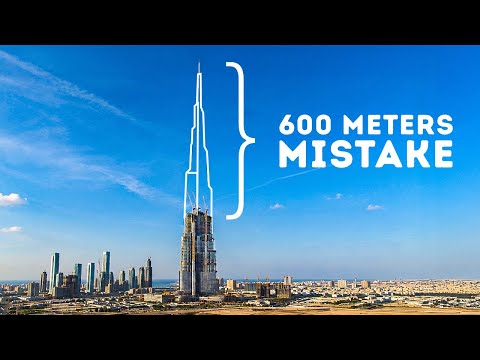
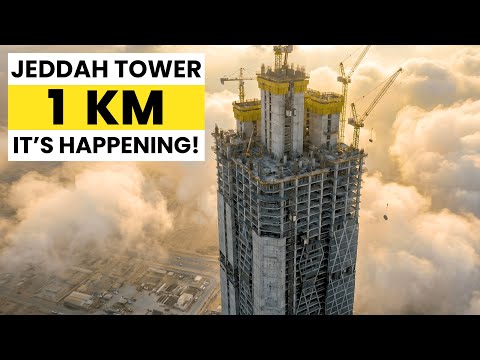
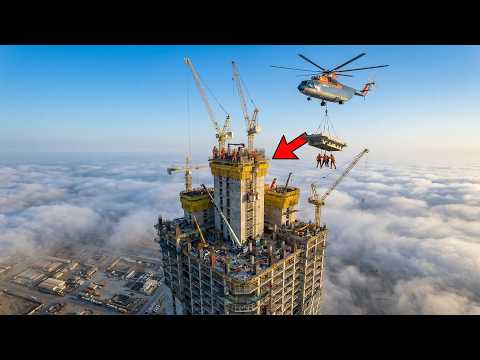
In April 2026, construction crews topped out the 100th floor of Jeddah Tower on Saudi Arabia's Red Sea coast, a milestone in the race to complete what will be the world's first building to reach one kilometer in height, surpassing Dubai's Burj Khalifa. Designed by Adrian Smith, who also designed the Burj Khalifa, the planned 157-floor tower is being developed by Prince Al-Waleed bin Talal's Kingdom Holding Company. The project sat frozen for roughly seven years after 2018, when its original contractor Saudi Binladin Group lost its chairman and Prince Al-Waleed himself was detained during a Saudi anti-corruption purge; construction resumed only in January 2025, jumping from 63 to 100 floors within about 16 months. It now carries a price tag of roughly $26 billion with completion targeted for 2028, and will include a Four Seasons hotel, luxury apartments, offices, 56 elevators moving at 12 meters per second, and a 30-meter cantilevered observation balcony, ultimately housing an estimated 100,000 people. It's a flashpoint for debate because it embodies both a genuine structural engineering feat and the wider controversy swirling around Saudi Arabia's Vision 2030 giga-projects, which Human Rights Watch's December 2024 report and other investigations have linked to systemic migrant-worker abuses and debt-fueled spending.
🏆 Leading: Jeddah Tower is an unmatched feat of structural engineering that deserves celebration, not skepticism. Adrian Smith and his team are solving problems no one has ever faced, building on notoriously weak coastal soil, managing wind and seismic loads at heights never attempted, and engineering elevators fast enough to make a kilometer-tall commute practical. Reaching 100 floors within roughly 16 months of restarting construction after a seven-year freeze shows the project has real technical and financial momentum behind it now. When complete in 2028, it will represent the next great leap in supertall design, the same kind of milestone the Burj Khalifa, the Eiffel Tower, and the Empire State Building once were in their eras. Dismissing it as mere spectacle ignores the genuine advances in materials science, wind engineering, and vertical transportation that this project is pushing forward. (56%)🥈 A $26 billion tower built by a prince who was himself detained in a corruption crackdown, financed through a company with a history of stalled mega-projects, is not a symbol of progress, it's a monument to opulence and financial risk. The project already collapsed once for seven years after political turmoil and cost overruns, and there is no guarantee the current restart avoids the same fate given the extraordinary engineering difficulty of building a kilometer into the sky on weak coastal soil. Pouring tens of billions into a single luxury tower with a Four Seasons hotel and ultra-premium apartments, in a country still developing basic infrastructure and diversifying away from oil revenue, raises real questions about priorities. Skyscraper record-chasing has a long history of vanity-driven overreach, and skeptics argue Jeddah Tower may never actually reach its promised one-kilometer height on schedule or on budget. (33%)🥉 The real story of Jeddah Tower isn't the height record, it's the human cost behind Saudi Arabia's entire giga-project boom. Human Rights Watch's December 2024 investigation into these projects documented widespread abuses against the migrant workers who build them, including unpaid wages, dangerous conditions, and deaths that companies and the Saudi government have been slow to acknowledge or investigate. A tower marketed around luxury apartments, a Four Seasons hotel, and gleaming record-breaking elevators sits uneasily alongside reports of exploited laborers who have little legal recourse under Saudi Arabia's employment system. Celebrating the architectural milestone while ignoring who is physically building it, often under punishing heat and precarious contracts, is an incomplete and arguably irresponsible way to tell this story. Any honest debate about Jeddah Tower has to weigh its engineering ambition against the labor conditions that make it possible. (11%)🌍 🇨🇳 China
Jeddah Tower is an unmatched feat of structural engineering that deserves celebration, not skepticism. Adrian Smith and his team are solving problems no one has ever faced, building on notoriously weak coastal soil, managing wind and seismic loads at heights never attempted, and engineering elevators fast enough to make a kilometer-tall commute practical. Reaching 100 floors within roughly 16 months of restarting construction after a seven-year freeze shows the project has real technical and financial momentum behind it now. When complete in 2028, it will represent the next great leap in supertall design, the same kind of milestone the Burj Khalifa, the Eiffel Tower, and the Empire State Building once were in their eras. Dismissing it as mere spectacle ignores the genuine advances in materials science, wind engineering, and vertical transportation that this project is pushing forward.
A $26 billion tower built by a prince who was himself detained in a corruption crackdown, financed through a company with a history of stalled mega-projects, is not a symbol of progress, it's a monument to opulence and financial risk. The project already collapsed once for seven years after political turmoil and cost overruns, and there is no guarantee the current restart avoids the same fate given the extraordinary engineering difficulty of building a kilometer into the sky on weak coastal soil. Pouring tens of billions into a single luxury tower with a Four Seasons hotel and ultra-premium apartments, in a country still developing basic infrastructure and diversifying away from oil revenue, raises real questions about priorities. Skyscraper record-chasing has a long history of vanity-driven overreach, and skeptics argue Jeddah Tower may never actually reach its promised one-kilometer height on schedule or on budget.

Poll as Guest Infographics
From around the web

Similar to hewsay's "Jeddah Tower's Comeback: Is Saudi Arabia's Kilometer-High Skyscraper an Engineering Triumph or a $26 Billion Vanity Project?"

Quoted & linked with attribution — not a hewsay user post.
Title: Will the Jeddah Tower ever be built? - Quora Skyscraper in Saudi Arabia Jeddah Tower برج جدة Jeddah Tower as of February 5, 2026 Interactive map of the Jeddah Tower area General information Status Under construction Type Mixed-use Architectural style Neo-futurism Locati...
quora.com · Quora
View original
Why is construction on the Kingdom Tower in Jeddah, Saudi Arabia currently on hold? Under-construction skyscraper in Jeddah, Saudi Arabia Jeddah Tower برج جدة Interactive map of Jeddah Tower General information Status Under construction Type Mixed-use Architectural style Neo-f...
quora.com · Quora
View original