🔥 Featured Questions
Jackson Pollock's $181.2 Million "Number 7A": Landmark Masterpiece or Symptom of an Overheated, Guarantee-Rigged Art Market?

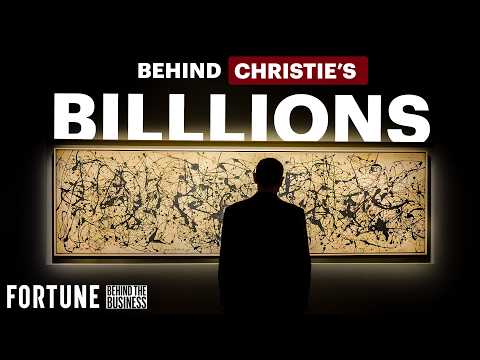
On May 19, 2026, Christie's New York sold Jackson Pollock's 1948 drip painting Number 7A for $181.2 million with fees, nearly tripling the artist's previous auction record of roughly $61-62 million set in 2021 and making it one of the most expensive paintings ever sold at auction. The work came from the estate of the late Conde Nast chairman S.I. Newhouse and was fought over in a roughly seven-minute bidding battle before selling. It was part of a broader evening that saw Christie's combine two sales to bring in over $1.1 billion total, only the second time a single auction house has crossed $1 billion in one night in auction history; the same evening also set new auction records for Constantin Brancusi and Mark Rothko. Notably, the Newhouse sale achieved a 100% sell-through rate but was entirely backed by third-party and house guarantees on 30 of 47 lots, meaning much of the market demand was contractually locked in before the auction even began. Art advisor Hugo Nathan observed that it was a huge amount of money shared among a small number of bidders, while a Modigliani in the same sale was withdrawn amid a $30-40 million shortfall from expectations.

🏆 Leading: Strip away the auction-house theater and this looks less like organic demand and more like a manufactured spectacle: 30 of the Newhouse sale's 47 lots were backed by third-party or house guarantees, meaning Christie's had effectively pre-sold much of the evening before a single paddle went up, turning market confidence into a self-fulfilling headline. Advisor Hugo Nathan's own comment that it was a huge amount of money shared among a small number of bidders undercuts the narrative of broad-based enthusiasm, this was a handful of ultra-wealthy players and their advisors bidding against each other in a closed loop. A Modigliani in the very same sale had to be withdrawn amid a $30-40 million shortfall, showing the market is far from bullet-proof once you look past the headline trophies. In an environment where blue-chip names get record prices while mid-tier and emerging artists struggle, this looks like capital fleeing to safe, guarantee-cushioned assets, behavior indistinguishable from a speculative bubble propped up by the auction houses' own financial engineering. (43%)🥈 This sale is a genuine art-historical milestone, not just a financial one, Number 7A is regarded by scholars as one of the purest expressions of Pollock's revolutionary drip technique, the moment he freed himself from the shackles of conventional easel painting and helped invent American Abstract Expressionism. Unlike speculative contemporary works bought purely as trophies, this 1948 canvas has seven decades of museum exhibitions, scholarship, and cultural significance behind it, making its price a reflection of irreplaceable rarity rather than hype. The fact that serious collectors fought for seven minutes over it, and that it sits alongside a new Rothko and Brancusi record in the same evening, shows deep, durable demand for canonical 20th-century masterworks specifically, not a generic asset bubble. Comparing it to Leonardo's $450 million Salvator Mundi, commentators note Pollock still trades at a fraction of that benchmark despite arguably greater influence on modern art. When a work this rare comes to market, a nine-figure price is simply what true scarcity commands. (29%)🥉 A single 11-foot canvas selling for $181.2 million, enough to fund thousands of working artists, museum education programs, or public arts initiatives for a generation, is a damning symbol of how disconnected the fine-art economy has become from actual culture-making. This sale happened in a system where a tiny circle of billionaire collectors and estates, here, the heirs of a media magnate, trade paintings as private wealth-storage vehicles, insulated by guarantees, tax advantages, and freeport storage, while living artists battle for grants and gallery representation. The record-breaking framing itself is elitist theater engineered by Christie's marketing and guarantee structures to generate headlines that reinforce the mystique, and thus the price floor, of an exclusive club's holdings. Critics argue that when artistry becomes secondary to provenance, scarcity, and estate-liquidity needs, the auction becomes less about Pollock's genius and more about status signaling among people for whom $181 million is a rounding error. (29%)🌍 🇨🇳 China
Strip away the auction-house theater and this looks less like organic demand and more like a manufactured spectacle: 30 of the Newhouse sale's 47 lots were backed by third-party or house guarantees, meaning Christie's had effectively pre-sold much of the evening before a single paddle went up, turning market confidence into a self-fulfilling headline. Advisor Hugo Nathan's own comment that it was a huge amount of money shared among a small number of bidders undercuts the narrative of broad-based enthusiasm, this was a handful of ultra-wealthy players and their advisors bidding against each other in a closed loop. A Modigliani in the very same sale had to be withdrawn amid a $30-40 million shortfall, showing the market is far from bullet-proof once you look past the headline trophies. In an environment where blue-chip names get record prices while mid-tier and emerging artists struggle, this looks like capital fleeing to safe, guarantee-cushioned assets, behavior indistinguishable from a speculative bubble propped up by the auction houses' own financial engineering.
A single 11-foot canvas selling for $181.2 million, enough to fund thousands of working artists, museum education programs, or public arts initiatives for a generation, is a damning symbol of how disconnected the fine-art economy has become from actual culture-making. This sale happened in a system where a tiny circle of billionaire collectors and estates, here, the heirs of a media magnate, trade paintings as private wealth-storage vehicles, insulated by guarantees, tax advantages, and freeport storage, while living artists battle for grants and gallery representation. The record-breaking framing itself is elitist theater engineered by Christie's marketing and guarantee structures to generate headlines that reinforce the mystique, and thus the price floor, of an exclusive club's holdings. Critics argue that when artistry becomes secondary to provenance, scarcity, and estate-liquidity needs, the auction becomes less about Pollock's genius and more about status signaling among people for whom $181 million is a rounding error.

Poll as Guest Infographics
From around the web

Similar to hewsay's "Jackson Pollock's $181.2 Million "Number 7A": Landmark Masterpiece or Symptom of an Overheated, Guarantee-Rigged Art Market?"

Quoted & linked with attribution — not a hewsay user post.
How much is the Jackson Pollock painting worth in the movie. In the movie "The Accountant," the Jackson Pollock painting featured is called "Free Form" . While the exact value of the painting is not specified in the movie, it is known that Jackson Pollock's paintings are highl...
quora.com · Quora
View original
What is the subject in Jackson Pollock’s art? What is the subject in Jackson Pollock’s art? If you watch him work, it’s as if he’s dancing with the paint. it’s a complete departure from the style of painting where an artists stands in front of a canvas and tried to create an i...
quora.com · Quora
View original
Favorite Samsung phone of all time

Your fav Samsung phone, so many, please add on the choice


Poll as Guest Infographics
From around the web

Similar to hewsay's "Favorite Samsung phone of all time"

Quoted & linked with attribution — not a hewsay user post.
Favorite samsung phone of all time is definitely the note. S10+ the most beautiful phone ever from Samsung. 1y ago S10+ was the greatest phone
reddit.com · Reddit
View original
S24 Ultra is still the best Samsung as they keep removing features and 25 is a downgrade. it's my favorite phone of all time engfish
reddit.com · Reddit
View original

Never miss a new question

One email per question, straight to your inbox. Unsubscribe anytime.