🔥 Featured Questions
A 1964 Shelby Cobra Daytona Coupe Just Sold for $42.9 Million, Smashing the American Car Record — Historic Bargain or Sign of a Wildly Overheated Market?

On August 17, 2026, at the Gooding Christie's Pebble Beach auction during Monterey Car Week, a 1964 Shelby Cobra Daytona Coupe (chassis CSX2300) sold for $42,905,000 including buyer's premium, becoming the most expensive American car ever sold at auction. The sale obliterated the prior American record of $22 million set by a 1935 Duesenberg SSJ in 2018, and even topped a Ferrari 250 GTO's recent $38.5 million benchmark. Only six Daytona Coupes were ever built by Carroll Shelby's team specifically to beat Ferrari on the track, and this is the only one Shelby personally owned, having raced at the 1964 Tour de France Automobile and helped clinch the 1965 FIA GT Championship, the first and only time an American manufacturer topped the world GT standings. The sale blew past its pre-sale estimate of roughly $25 million and anchored a record-shattering Monterey Car Week overall, where five auction houses combined for $747.9 million in sales, a 73% jump over 2025. Yet that same week exposed a stark divide in the market: while a handful of blue-chip cars fetched historic prices, many prewar classics and mid-tier cars sold soft or went unsold, fueling debate over whether the market is healthy or dangerously bifurcated.

🏆 Leading: The real story here isn't the dollar figure, it's what happens to the car next, and that's exactly why this sale matters for preservation. Unlike most nine-figure trophy cars that vanish into climate-controlled vaults never to turn a wheel again, CSX2300 is described as still road legal and race eligible, continuing a decades-long tradition of actually being driven at events like the Tour Auto and Goodwood, where all six surviving Daytona Coupes have been reunited on track. That living history is worth protecting: a car this significant to American motorsport should keep being exercised and shown to the public rather than becoming a static investment vehicle locked away from view. The debate collectors should be having isn't whether $42.9 million is worth it, but whether the new owner will honor the car's legacy as an actively raced piece of history the way Shelby himself did, or whether the record price effectively ends its driving days for good out of sheer financial caution. (67%)🥈 Look past the headline number and Monterey 2026 tells a story of a dangerously bifurcated, speculative market rather than broad-based strength. The same week the Cobra sold for a record $42.9 million, prewar classics and countless mid-tier cars went unsold or sold well under estimate, meaning the $747.9 million total is being propped up almost entirely by a tiny handful of unicorn lots chasing each other's records rather than organic demand across the collector base. When ultra-wealthy bidders treat a handful of trophy cars as an asset class competing with fine art and can push a single lot 70% above its pre-sale estimate while the rest of the field softens, that's a classic sign of speculative concentration, not a healthy market. History suggests these blow-off top prices at the very peak of a boom, as with the late-1980s Japanese-driven classic car bubble, often precede a painful correction once the music stops for even blue-chip lots. Collectors chasing this record shouldn't assume it reflects durable value; it may just be the last gasp of froth at the top before the broader market catches down to reality. (33%)🌍 🇨🇳 China
The real story here isn't the dollar figure, it's what happens to the car next, and that's exactly why this sale matters for preservation. Unlike most nine-figure trophy cars that vanish into climate-controlled vaults never to turn a wheel again, CSX2300 is described as still road legal and race eligible, continuing a decades-long tradition of actually being driven at events like the Tour Auto and Goodwood, where all six surviving Daytona Coupes have been reunited on track. That living history is worth protecting: a car this significant to American motorsport should keep being exercised and shown to the public rather than becoming a static investment vehicle locked away from view. The debate collectors should be having isn't whether $42.9 million is worth it, but whether the new owner will honor the car's legacy as an actively raced piece of history the way Shelby himself did, or whether the record price effectively ends its driving days for good out of sheer financial caution.
Look past the headline number and Monterey 2026 tells a story of a dangerously bifurcated, speculative market rather than broad-based strength. The same week the Cobra sold for a record $42.9 million, prewar classics and countless mid-tier cars went unsold or sold well under estimate, meaning the $747.9 million total is being propped up almost entirely by a tiny handful of unicorn lots chasing each other's records rather than organic demand across the collector base. When ultra-wealthy bidders treat a handful of trophy cars as an asset class competing with fine art and can push a single lot 70% above its pre-sale estimate while the rest of the field softens, that's a classic sign of speculative concentration, not a healthy market. History suggests these blow-off top prices at the very peak of a boom, as with the late-1980s Japanese-driven classic car bubble, often precede a painful correction once the music stops for even blue-chip lots. Collectors chasing this record shouldn't assume it reflects durable value; it may just be the last gasp of froth at the top before the broader market catches down to reality.

Poll as Guest Infographics
From around the web

Similar to hewsay's "A 1964 Shelby Cobra Daytona Coupe Just Sold for $42.9 Million, Smashing the American Car Record — Historic Bargain or Sign of a Wildly Overheated Market?"

Quoted & linked with attribution — not a hewsay user post.
Title: Reddit - The heart of the internet # The Shelby Cobra Daytona Coupe competed at LeMans 1964/1965. Go to this link for some very special photographs provided by USA Library of Congress. No known restrictions on images made by the U.S. Government, Historic American Engine...
reddit.com · Reddit
View original
Title: Reddit - The heart of the internet # 50th Anniversary Shelby Cobra Daytona Coupe bangs a U-ey... Sorry, something went wrong when loading this video. Anyone can view, post, and comment to this community. ## Top Posts. Turn any process into a clear video guide in 3 easy ...
reddit.com · Reddit
View original
A $812,500 Sip of History: Was the Record-Shattering 1945 Romanée-Conti Worth More Than a House?

On March 28, 2026, at Acker's three-day La Paulee auction in New York, a single bottle of 1945 Domaine de la Romanee-Conti sold for $812,500, becoming the most expensive bottle of wine ever sold at auction and smashing the previous record of $558,000 set by another bottle from the very same vintage back in 2018. The bottle came from the historic cellar of former DRC co-owner Robert Drouhin and was one of only roughly 600 bottles ever produced of the 1945 vintage, the last harvest from DRC's original pre-phylloxera vines before the domaine was forced to rip them out and replant in 1947. Acker chairman John Kapon, who has personally driven several of the world's top wine auction records, called it the greatest wine that I have ever tasted. The broader three-day sale grossed more than $25 million and set 460 individual auction records, underscoring just how much money is still chasing trophy Burgundy even as parts of the broader fine-wine investment market have cooled over 2025-2026. Critics point out that a wine this old is essentially undrinkable as a beverage and functions purely as a speculative collectible, while skeptics also flag the notorious risk of counterfeiting in a market where provenance can rarely be fully verified.
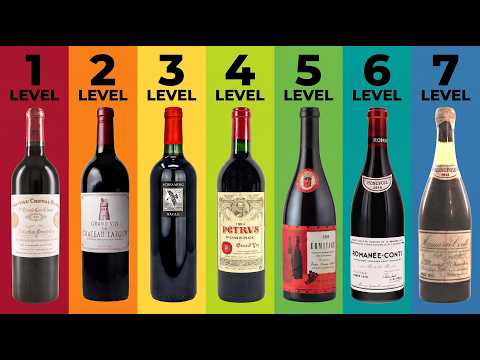
🏆 Leading: This sale is a once-in-history moment of pure scarcity value, not hype. The 1945 vintage came from Domaine de la Romanee-Conti's original, pre-phylloxera vines, which were destroyed and replanted in 1947, meaning no wine like it can ever be made again, from those exact vines, in that exact soil, under those exact wartime conditions. Only around 600 bottles were produced, and each surviving bottle represents a tangible link to a domaine widely regarded as the pinnacle of Burgundian winemaking. John Kapon, one of the most experienced palates in the fine-wine world, called it the greatest wine he had ever tasted, suggesting the liquid inside genuinely justifies reverence beyond just the label. When something is truly irreplaceable, a finite, non-renewable piece of agricultural and cultural history, a price tag in the hundreds of thousands isn't absurd, it's simply what true rarity costs. (33%)🥈 Strip away the romance and this is a speculative asset trade, not a wine purchase. An 81-year-old bottle of wine is almost certainly undrinkable or at best a shadow of its former self, meaning buyers aren't purchasing an experience, they're purchasing a trophy asset expected to appreciate, exactly like a rare painting or a numbered sneaker. The fact that this same vintage broke its own record just eight years after the last record, $558,000 in 2018 to $812,500 in 2026, shows a market where price is driven by auction momentum and bragging rights among a tiny circle of ultra-wealthy collectors, not by any real change in the wine itself. Add in the well-documented history of counterfeit old and rare bottles flooding the collector market, and buyers are effectively betting six figures on provenance paperwork as much as on the wine. This looks less like connoisseurship and more like a rarefied casino for people who already have everything. (33%)🥉 A $812,500 bottle of wine is a glaring symbol of how disconnected fine wine culture has become from the people who actually make and love it. While a single collector drops nearly a million dollars on one bottle to sip or simply display, ordinary wine lovers and even working sommeliers can never taste, let alone own, anything close to a top vintage from a producer like DRC, pricing an entire tier of winemaking excellence out of reach for anyone but the ultra-rich. Auctions like this one, which generated over $25 million and set 460 records in a single event, reinforce fine wine's reputation as an exclusive playground rather than a shared cultural tradition rooted in food, land, and community. Critics argue that when headline sales become about record-chasing and status display, they distort the broader market and public perception of wine, making it seem like something to be hoarded and speculated on rather than opened and enjoyed. Defenders of accessible wine culture see moments like this as exactly what's wrong with treating agricultural craft as a luxury commodity. (33%)🌍 🇨🇳 China
A $812,500 bottle of wine is a glaring symbol of how disconnected fine wine culture has become from the people who actually make and love it. While a single collector drops nearly a million dollars on one bottle to sip or simply display, ordinary wine lovers and even working sommeliers can never taste, let alone own, anything close to a top vintage from a producer like DRC, pricing an entire tier of winemaking excellence out of reach for anyone but the ultra-rich. Auctions like this one, which generated over $25 million and set 460 records in a single event, reinforce fine wine's reputation as an exclusive playground rather than a shared cultural tradition rooted in food, land, and community. Critics argue that when headline sales become about record-chasing and status display, they distort the broader market and public perception of wine, making it seem like something to be hoarded and speculated on rather than opened and enjoyed. Defenders of accessible wine culture see moments like this as exactly what's wrong with treating agricultural craft as a luxury commodity.

Poll as Guest Infographics
From around the web

Similar to hewsay's "A $812,500 Sip of History: Was the Record-Shattering 1945 Romanée-Conti Worth More Than a House?"

Quoted & linked with attribution — not a hewsay user post.
* Marginal utility: adding a bedroom typically increases market value because it raises functional utility (more occupants, home office, guest room, rental potential). * Marginal utility: adding a bedroom typically increases market value because it raises functional utility (m...
quora.com · Quora
View original
Title: Reddit - The heart of the internet # jaystats2. ## Is Ryan Gosling the next Tom Hanks? Hanks’ range and delivery is superior to Gosling’s. ## If you were granted a wish for any single piece of movie memorabilia, what would it be? Really appreciate everyone taking the ti...
reddit.com · Reddit
View original