🔥 Featured Questions
A $812,500 Sip of History: Was the Record-Shattering 1945 Romanée-Conti Worth More Than a House?

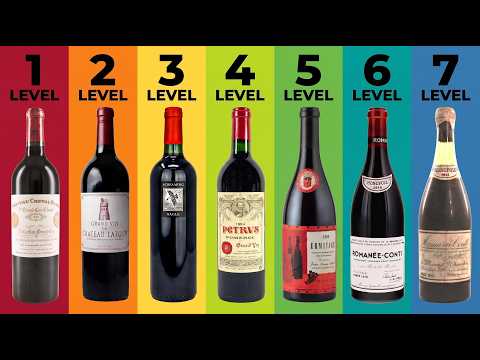
On March 28, 2026, at Acker's three-day La Paulee auction in New York, a single bottle of 1945 Domaine de la Romanee-Conti sold for $812,500, becoming the most expensive bottle of wine ever sold at auction and smashing the previous record of $558,000 set by another bottle from the very same vintage back in 2018. The bottle came from the historic cellar of former DRC co-owner Robert Drouhin and was one of only roughly 600 bottles ever produced of the 1945 vintage, the last harvest from DRC's original pre-phylloxera vines before the domaine was forced to rip them out and replant in 1947. Acker chairman John Kapon, who has personally driven several of the world's top wine auction records, called it the greatest wine that I have ever tasted. The broader three-day sale grossed more than $25 million and set 460 individual auction records, underscoring just how much money is still chasing trophy Burgundy even as parts of the broader fine-wine investment market have cooled over 2025-2026. Critics point out that a wine this old is essentially undrinkable as a beverage and functions purely as a speculative collectible, while skeptics also flag the notorious risk of counterfeiting in a market where provenance can rarely be fully verified.
🗳️ 19 votes so far🏆 Leading: This sale is a once-in-history moment of pure scarcity value, not hype. The 1945 vintage came from Domaine de la Romanee-Conti's original, pre-phylloxera vines, which were destroyed and replanted in 1947, meaning no wine like it can ever be made again, from those exact vines, in that exact soil, under those exact wartime conditions. Only around 600 bottles were produced, and each surviving bottle represents a tangible link to a domaine widely regarded as the pinnacle of Burgundian winemaking. John Kapon, one of the most experienced palates in the fine-wine world, called it the greatest wine he had ever tasted, suggesting the liquid inside genuinely justifies reverence beyond just the label. When something is truly irreplaceable, a finite, non-renewable piece of agricultural and cultural history, a price tag in the hundreds of thousands isn't absurd, it's simply what true rarity costs. (37%)🥈 Strip away the romance and this is a speculative asset trade, not a wine purchase. An 81-year-old bottle of wine is almost certainly undrinkable or at best a shadow of its former self, meaning buyers aren't purchasing an experience, they're purchasing a trophy asset expected to appreciate, exactly like a rare painting or a numbered sneaker. The fact that this same vintage broke its own record just eight years after the last record, $558,000 in 2018 to $812,500 in 2026, shows a market where price is driven by auction momentum and bragging rights among a tiny circle of ultra-wealthy collectors, not by any real change in the wine itself. Add in the well-documented history of counterfeit old and rare bottles flooding the collector market, and buyers are effectively betting six figures on provenance paperwork as much as on the wine. This looks less like connoisseurship and more like a rarefied casino for people who already have everything. (32%)🥉 A $812,500 bottle of wine is a glaring symbol of how disconnected fine wine culture has become from the people who actually make and love it. While a single collector drops nearly a million dollars on one bottle to sip or simply display, ordinary wine lovers and even working sommeliers can never taste, let alone own, anything close to a top vintage from a producer like DRC, pricing an entire tier of winemaking excellence out of reach for anyone but the ultra-rich. Auctions like this one, which generated over $25 million and set 460 records in a single event, reinforce fine wine's reputation as an exclusive playground rather than a shared cultural tradition rooted in food, land, and community. Critics argue that when headline sales become about record-chasing and status display, they distort the broader market and public perception of wine, making it seem like something to be hoarded and speculated on rather than opened and enjoyed. Defenders of accessible wine culture see moments like this as exactly what's wrong with treating agricultural craft as a luxury commodity. (32%)⚖️ Split decision🌍 🇨🇳 China, 🇹🇳 Tunisia
A $812,500 bottle of wine is a glaring symbol of how disconnected fine wine culture has become from the people who actually make and love it. While a single collector drops nearly a million dollars on one bottle to sip or simply display, ordinary wine lovers and even working sommeliers can never taste, let alone own, anything close to a top vintage from a producer like DRC, pricing an entire tier of winemaking excellence out of reach for anyone but the ultra-rich. Auctions like this one, which generated over $25 million and set 460 records in a single event, reinforce fine wine's reputation as an exclusive playground rather than a shared cultural tradition rooted in food, land, and community. Critics argue that when headline sales become about record-chasing and status display, they distort the broader market and public perception of wine, making it seem like something to be hoarded and speculated on rather than opened and enjoyed. Defenders of accessible wine culture see moments like this as exactly what's wrong with treating agricultural craft as a luxury commodity.

Poll as Guest Infographics
From around the web

Similar to hewsay's "A $812,500 Sip of History: Was the Record-Shattering 1945 Romanée-Conti Worth More Than a House?"

Quoted & linked with attribution — not a hewsay user post.
* Marginal utility: adding a bedroom typically increases market value because it raises functional utility (more occupants, home office, guest room, rental potential). * Marginal utility: adding a bedroom typically increases market value because it raises functional utility (m...
quora.com · Quora
View original
Title: Reddit - The heart of the internet # jaystats2. ## Is Ryan Gosling the next Tom Hanks? Hanks’ range and delivery is superior to Gosling’s. ## If you were granted a wish for any single piece of movie memorabilia, what would it be? Really appreciate everyone taking the ti...
reddit.com · Reddit
View original
Jeddah Tower's Comeback: Is Saudi Arabia's Kilometer-High Skyscraper an Engineering Triumph or a $26 Billion Vanity Project?

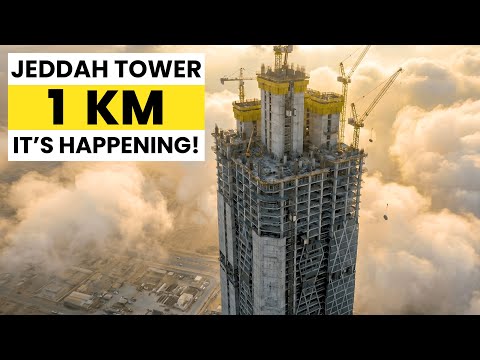
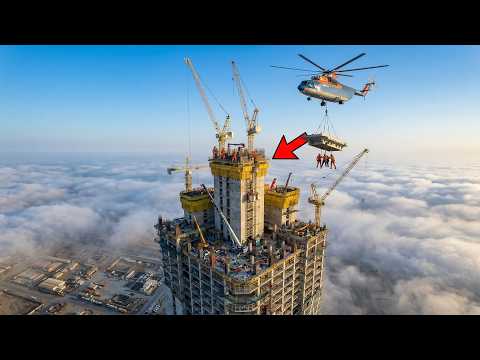
In April 2026, construction crews topped out the 100th floor of Jeddah Tower on Saudi Arabia's Red Sea coast, a milestone in the race to complete what will be the world's first building to reach one kilometer in height, surpassing Dubai's Burj Khalifa. Designed by Adrian Smith, who also designed the Burj Khalifa, the planned 157-floor tower is being developed by Prince Al-Waleed bin Talal's Kingdom Holding Company. The project sat frozen for roughly seven years after 2018, when its original contractor Saudi Binladin Group lost its chairman and Prince Al-Waleed himself was detained during a Saudi anti-corruption purge; construction resumed only in January 2025, jumping from 63 to 100 floors within about 16 months. It now carries a price tag of roughly $26 billion with completion targeted for 2028, and will include a Four Seasons hotel, luxury apartments, offices, 56 elevators moving at 12 meters per second, and a 30-meter cantilevered observation balcony, ultimately housing an estimated 100,000 people. It's a flashpoint for debate because it embodies both a genuine structural engineering feat and the wider controversy swirling around Saudi Arabia's Vision 2030 giga-projects, which Human Rights Watch's December 2024 report and other investigations have linked to systemic migrant-worker abuses and debt-fueled spending.
🗳️ 17 votes so far🏆 Leading: Jeddah Tower is an unmatched feat of structural engineering that deserves celebration, not skepticism. Adrian Smith and his team are solving problems no one has ever faced, building on notoriously weak coastal soil, managing wind and seismic loads at heights never attempted, and engineering elevators fast enough to make a kilometer-tall commute practical. Reaching 100 floors within roughly 16 months of restarting construction after a seven-year freeze shows the project has real technical and financial momentum behind it now. When complete in 2028, it will represent the next great leap in supertall design, the same kind of milestone the Burj Khalifa, the Eiffel Tower, and the Empire State Building once were in their eras. Dismissing it as mere spectacle ignores the genuine advances in materials science, wind engineering, and vertical transportation that this project is pushing forward. (47%)🥈 The real story of Jeddah Tower isn't the height record, it's the human cost behind Saudi Arabia's entire giga-project boom. Human Rights Watch's December 2024 investigation into these projects documented widespread abuses against the migrant workers who build them, including unpaid wages, dangerous conditions, and deaths that companies and the Saudi government have been slow to acknowledge or investigate. A tower marketed around luxury apartments, a Four Seasons hotel, and gleaming record-breaking elevators sits uneasily alongside reports of exploited laborers who have little legal recourse under Saudi Arabia's employment system. Celebrating the architectural milestone while ignoring who is physically building it, often under punishing heat and precarious contracts, is an incomplete and arguably irresponsible way to tell this story. Any honest debate about Jeddah Tower has to weigh its engineering ambition against the labor conditions that make it possible. (29%)🥉 A $26 billion tower built by a prince who was himself detained in a corruption crackdown, financed through a company with a history of stalled mega-projects, is not a symbol of progress, it's a monument to opulence and financial risk. The project already collapsed once for seven years after political turmoil and cost overruns, and there is no guarantee the current restart avoids the same fate given the extraordinary engineering difficulty of building a kilometer into the sky on weak coastal soil. Pouring tens of billions into a single luxury tower with a Four Seasons hotel and ultra-premium apartments, in a country still developing basic infrastructure and diversifying away from oil revenue, raises real questions about priorities. Skyscraper record-chasing has a long history of vanity-driven overreach, and skeptics argue Jeddah Tower may never actually reach its promised one-kilometer height on schedule or on budget. (24%)🌍 🇨🇳 China
Jeddah Tower is an unmatched feat of structural engineering that deserves celebration, not skepticism. Adrian Smith and his team are solving problems no one has ever faced, building on notoriously weak coastal soil, managing wind and seismic loads at heights never attempted, and engineering elevators fast enough to make a kilometer-tall commute practical. Reaching 100 floors within roughly 16 months of restarting construction after a seven-year freeze shows the project has real technical and financial momentum behind it now. When complete in 2028, it will represent the next great leap in supertall design, the same kind of milestone the Burj Khalifa, the Eiffel Tower, and the Empire State Building once were in their eras. Dismissing it as mere spectacle ignores the genuine advances in materials science, wind engineering, and vertical transportation that this project is pushing forward.
A $26 billion tower built by a prince who was himself detained in a corruption crackdown, financed through a company with a history of stalled mega-projects, is not a symbol of progress, it's a monument to opulence and financial risk. The project already collapsed once for seven years after political turmoil and cost overruns, and there is no guarantee the current restart avoids the same fate given the extraordinary engineering difficulty of building a kilometer into the sky on weak coastal soil. Pouring tens of billions into a single luxury tower with a Four Seasons hotel and ultra-premium apartments, in a country still developing basic infrastructure and diversifying away from oil revenue, raises real questions about priorities. Skyscraper record-chasing has a long history of vanity-driven overreach, and skeptics argue Jeddah Tower may never actually reach its promised one-kilometer height on schedule or on budget.

Poll as Guest Infographics
From around the web

Similar to hewsay's "Jeddah Tower's Comeback: Is Saudi Arabia's Kilometer-High Skyscraper an Engineering Triumph or a $26 Billion Vanity Project?"

Quoted & linked with attribution — not a hewsay user post.
Title: Will the Jeddah Tower ever be built? - Quora Skyscraper in Saudi Arabia Jeddah Tower برج جدة Jeddah Tower as of February 5, 2026 Interactive map of the Jeddah Tower area General information Status Under construction Type Mixed-use Architectural style Neo-futurism Locati...
quora.com · Quora
View original
Why is construction on the Kingdom Tower in Jeddah, Saudi Arabia currently on hold? Under-construction skyscraper in Jeddah, Saudi Arabia Jeddah Tower برج جدة Interactive map of Jeddah Tower General information Status Under construction Type Mixed-use Architectural style Neo-f...
quora.com · Quora
View original