AI just disproved an 80-year-old Erdős math conjecture, verified by a Fields Medalist — but OpenAI's last "Erdős breakthrough" claim was debunked. Real progress or hype cycle?
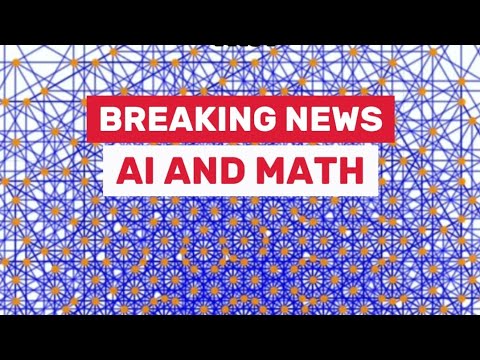
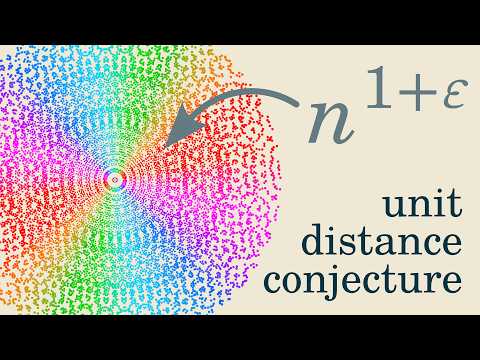
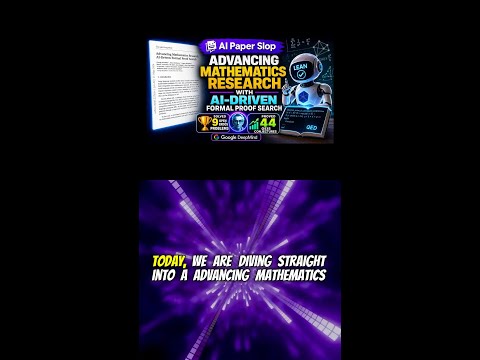
In May 2026, an OpenAI model made an unexpected cross-disciplinary leap: it linked a 1946 Erdős geometry puzzle (how many pairs of points on a plane can sit exactly one unit apart) to a completely unrelated 1964 algebraic number theory result, and used that connection to construct point arrangements beating every approach mathematicians had tried in 80 years — disproving Erdős's conjecture. Nine mathematicians, including Fields Medalist Tim Gowers, reviewed and confirmed the core ideas, calling it "a milestone in AI mathematics." One day later, Google DeepMind's AlphaProof Nexus independently solved nine more open Erdős problems using Lean, a system that checks proofs line by line rather than relying on a human reading them over. The catch: this isn't the first "AI cracks Erdős problems" headline. In October 2025, an earlier OpenAI claim of solving ten Erdős problems was thoroughly debunked by the math community. This time, unlike last time, independent mathematicians verified the work before it was announced.

Poll as Guest Infographics
Similar to hewsay's "AI just disproved an 80-year-old Erdős math conjecture, verified by a Fields Medalist — but OpenAI's last "Erdős breakthrough" claim was debunked. Real progress or hype cycle?"
Prime Numbers from previous Prime Numbers : r/math Skip to main contentPrime Numbers from previous Prime Numbers : r/math Open menu Open navigationGo to Reddit Home r/math A chip A close button Log InLog in to Reddit Expand user menu Open settings menu This subreddit is for di...
Title: Gerd Faltings wins the 2026 Abel Prize! : r/math # Gerd Faltings wins the 2026 Abel Prize! Skip to main contentGerd Faltings wins the 2026 Abel Prize! Open menu Open navigationGo to Reddit Home. Get App Get the Reddit app Log InLog in to Reddit. Expand user menu Open se...
OpenAI Eyes a Possible $1 Trillion IPO by 2027 While Burning Billions: Legitimate AI Bet or a Bubble Waiting to Pop?
OpenAI, last valued at roughly 852 billion dollars in a March 2026 funding round, is reportedly preparing for an IPO that could target a valuation of up to 1 trillion dollars and raise 60 billion dollars or more, possibly in late 2026 or 2027. The company's 2025 revenue grew 233 percent to about 20 billion dollars, but it lost roughly 1.22 dollars for every dollar of revenue, and 2026 losses are projected around 14 billion dollars, with cumulative losses potentially reaching 115 billion dollars by 2029 before profitability arrives sometime in the 2030s. OpenAI also missed its own 2026 revenue target of 30 billion dollars, and faces intensifying competition from Google's Gemini, which has reportedly reached about 900 million users, as well as Anthropic and others. Supporters see a category-defining company investing aggressively in a genuine technological shift; skeptics point to governance turmoil, heavy dependence on Microsoft, talent departures, and a widening gap between hype and financial fundamentals.



Poll as Guest Infographics
Similar to hewsay's "OpenAI Eyes a Possible $1 Trillion IPO by 2027 While Burning Billions: Legitimate AI Bet or a Bubble Waiting to Pop?"
# OpenAI reportedly aiming for 1 trillion dollar IPO valuation is this still an opportunity : r/stocks. Skip to main contentOpenAI reportedly aiming for 1 trillion dollar IPO valuation is this still an opportunity : r/stocks. Open menu Open navigationGo to Reddit Home. Get App...
# The AI history that explains fears of a bubble. Concerns among some investors are mounting that the AI sector, which has singlehandedly prevented the economy from sliding into recession, has become an unsustainable bubble. Nvidia, the main supplier of chips used in AI, becam...