Jackson Pollock's $181.2 Million "Number 7A": Landmark Masterpiece or Symptom of an Overheated, Guarantee-Rigged Art Market?
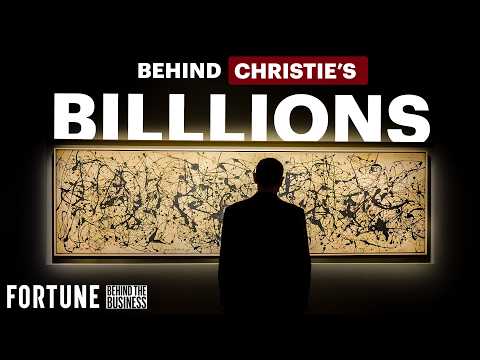
On May 19, 2026, Christie's New York sold Jackson Pollock's 1948 drip painting Number 7A for $181.2 million with fees, nearly tripling the artist's previous auction record of roughly $61-62 million set in 2021 and making it one of the most expensive paintings ever sold at auction. The work came from the estate of the late Conde Nast chairman S.I. Newhouse and was fought over in a roughly seven-minute bidding battle before selling. It was part of a broader evening that saw Christie's combine two sales to bring in over $1.1 billion total, only the second time a single auction house has crossed $1 billion in one night in auction history; the same evening also set new auction records for Constantin Brancusi and Mark Rothko. Notably, the Newhouse sale achieved a 100% sell-through rate but was entirely backed by third-party and house guarantees on 30 of 47 lots, meaning much of the market demand was contractually locked in before the auction even began. Art advisor Hugo Nathan observed that it was a huge amount of money shared among a small number of bidders, while a Modigliani in the same sale was withdrawn amid a $30-40 million shortfall from expectations.

Poll as Guest Infographics
Similar to hewsay's "Jackson Pollock's $181.2 Million "Number 7A": Landmark Masterpiece or Symptom of an Overheated, Guarantee-Rigged Art Market?"
How much is the Jackson Pollock painting worth in the movie. In the movie "The Accountant," the Jackson Pollock painting featured is called "Free Form" . While the exact value of the painting is not specified in the movie, it is known that Jackson Pollock's paintings are highl...
What is the subject in Jackson Pollock’s art? What is the subject in Jackson Pollock’s art? If you watch him work, it’s as if he’s dancing with the paint. it’s a complete departure from the style of painting where an artists stands in front of a canvas and tried to create an i...
Is your 10-step skincare routine actually good for your skin — or good for your feed?
The global skincare market crossed $122 billion in 2025, and some of that growth is getting harder to defend on health grounds alone. In 2024 the "Sephora kids" story went viral for a real reason — nine- and ten-year-olds were photographed stocking up on $70 retinol serums and vitamin-C acids meant for adult skin, and dermatologists (backed by an actual peer-reviewed harms study) started publicly warning about real irritation and barrier damage in young skin. Meanwhile a backlash trend called "skinimalism" — three products, done — has been trending for over a year, with dermatologists calling it the smarter approach all along.
The debate isn't really about whether skincare "works" — most of these ingredients are legitimately backed by dermatology research. It's about what's actually driving the routine: are people layering serums because a dermatologist would recommend it for their specific skin, or because "get ready with me" videos and $40 serum unboxings have turned a bathroom counter into a status display? Is the modern skincare aisle selling skin health, or selling the aesthetic of self-care?
Poll as Guest Infographics
Similar to hewsay's "Is your 10-step skincare routine actually good for your skin — or good for your feed?"
Contrary to the hottest skincare trends at the moment, you don’t need a 10 step skin care routine to have good skin (no matter how aesthetically pleasing it may look on a shelf ). Contrary to the hottest skincare trends at the moment, you don’t need a 10 step skin care routine...
What is a good one-step skin care routine? A one-step skin care routine, I think, is not a thing. A one-step skin care routine, I think, is not a thing. If you are wanting to keep your skin care routine down to 1–2 steps, then the next product I think is a must would be moistu...