๐Ÿ”ฅ Featured Questions
The most-watched video in YouTube history โ€” which one deserves the crown?

YouTube's all-time view counts are dominated by children's music videos and Latin pop, not the content most people expect. "Baby Shark Dance" recently became the first video to cross 17 billion views, but Despacito, Gangnam Style, and See You Again have each had their own turn as the reigning most-watched video on the platform. Which of these do you think best deserves the title?


Despacito (Luis Fonsi ft. Daddy Yankee) โ€” the reggaeton hit was the first video to hit 5 billion views and briefly broke YouTube's view counter in 2017, sitting at over 9 billion views today
Baby Shark Dance (Pinkfong) โ€” with over 17 billion views, this children's sing-along is the single most-watched video ever uploaded to YouTube, driven by endless replays from toddlers worldwide

Poll as Guest Infographics
From around the web

Similar to hewsay's "The most-watched video in YouTube history โ€” which one deserves the crown?"

Quoted & linked with attribution — not a hewsay user post.
Title: What is the most liked video in the history of YouTube? - Quora What is the most liked video in the history of YouTube? Originally Answered: Which is the most liked YouTube video? The most liked video on YouTube is "Baby Shark Dance" by Pinkfong with over 13.3 billion l...
quora.com · Quora
View original
Title: How to find out which was the first video on YouTube that I watched - Quora How do I find out which was the first video on YouTube that I watched? Finding the very first YouTube video you watched can be tricky because YouTube doesnโ€™t provide a single โ€œfirst-watchedโ€ tim...
quora.com · Quora
View original
Artemis II's Historic Lunar Flyby: Was NASA's $90 Billion Return to the Moon a Giant Leap or a Costly Detour?

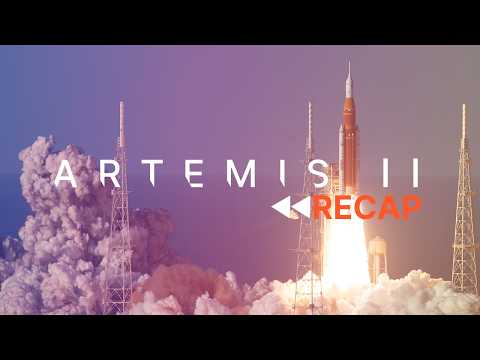
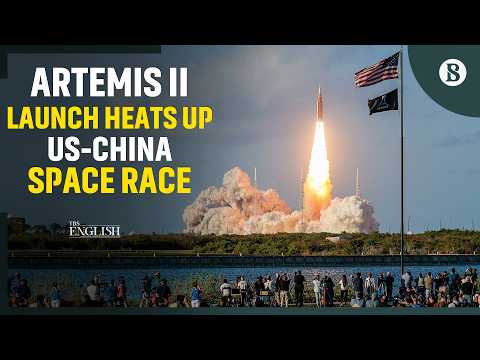
On April 1, 2026, NASA launched Artemis II from Kennedy Space Center aboard the Space Launch System rocket, sending astronauts Reid Wiseman, Victor Glover, Christina Koch, and Canadian Jeremy Hansen on a roughly 10-day free-return trajectory around the Moon, the first crewed lunar mission in over 50 years since Apollo 17 in 1972. The Orion capsule carried the crew farther from Earth than any humans since Apollo, looping around the far side of the Moon without landing, before splashing down safely off the California coast on April 11, 2026. The mission notched several firsts: Christina Koch became the first woman to fly beyond low Earth orbit, Victor Glover the first Black astronaut to do so, and Jeremy Hansen the first non-American to leave low Earth orbit. It followed years of delays and ballooning costs, with critics citing the broader Artemis program's roughly $90 billion price tag, even as polls found about 97% of Americans still supported the program. The flight is widely framed as the opening act of a new US-China lunar race, with NASA officials openly warning China could land its own astronauts on the Moon before the US completes its planned Artemis III landing later this decade.
๐Ÿ† Leading: Artemis II is a genuine historic milestone, the first time humans have left low Earth orbit in over 50 years, and it proves NASA's next-generation Orion spacecraft and SLS rocket can safely carry a crew around the Moon and bring them home. This wasn't a simple repeat of Apollo either: the mission delivered real firsts, the first woman, the first Black astronaut, and the first non-American ever to travel beyond low Earth orbit, showing a more inclusive era of deep-space exploration. With 97% of Americans reportedly backing the program despite its cost, the public appetite for human deep-space exploration is clearly still strong. This flight validates the hardware and procedures NASA needs for Artemis III's actual lunar landing, making it a necessary and triumphant stepping stone rather than an empty spectacle. (33%)๐Ÿฅˆ Nearly $90 billion and years of delays for a mission that didn't even land on the Moon is hard to justify when that money could fund medical research, climate resilience, or poverty reduction here on Earth. Critics have pointed out that a ten-day flyby without a lunar touchdown delivers more symbolism than science, especially compared to what robotic missions could accomplish for a fraction of the cost. The Artemis program has been plagued by cost overruns and schedule slips for over a decade, raising questions about whether SLS and Orion are the most efficient path to deep space at all, particularly as commercial alternatives like Starship promise cheaper access. Supporters point to 97% public approval, but polling on a feel-good national achievement doesn't necessarily reflect a rigorous cost-benefit analysis of competing federal priorities. (33%)๐Ÿฅ‰ Artemis II can't be judged in isolation, it's the opening move in a new space race with China, which is racing to put its own astronauts on the lunar surface before 2030. NASA officials have openly warned that China could reach the Moon's surface before America completes Artemis III, meaning this flyby is really about preserving US strategic and technological leadership in space, not just science or inspiration. Ceding the Moon, especially the resource-rich south pole, to a rival power carries long-term geopolitical consequences for space governance, lunar resource rights, and global prestige that go far beyond one mission's price tag. Framed this way, the $90 billion Artemis investment looks less like a luxury and more like a necessary down payment on maintaining American leadership in an increasingly contested domain, much like the original Space Race with the Soviet Union. (33%)๐ŸŒ ๐Ÿ‡จ๐Ÿ‡ณ China, ๐Ÿ‡ฟ๐Ÿ‡ฒ Zambia
Artemis II is a genuine historic milestone, the first time humans have left low Earth orbit in over 50 years, and it proves NASA's next-generation Orion spacecraft and SLS rocket can safely carry a crew around the Moon and bring them home. This wasn't a simple repeat of Apollo either: the mission delivered real firsts, the first woman, the first Black astronaut, and the first non-American ever to travel beyond low Earth orbit, showing a more inclusive era of deep-space exploration. With 97% of Americans reportedly backing the program despite its cost, the public appetite for human deep-space exploration is clearly still strong. This flight validates the hardware and procedures NASA needs for Artemis III's actual lunar landing, making it a necessary and triumphant stepping stone rather than an empty spectacle.
Artemis II can't be judged in isolation, it's the opening move in a new space race with China, which is racing to put its own astronauts on the lunar surface before 2030. NASA officials have openly warned that China could reach the Moon's surface before America completes Artemis III, meaning this flyby is really about preserving US strategic and technological leadership in space, not just science or inspiration. Ceding the Moon, especially the resource-rich south pole, to a rival power carries long-term geopolitical consequences for space governance, lunar resource rights, and global prestige that go far beyond one mission's price tag. Framed this way, the $90 billion Artemis investment looks less like a luxury and more like a necessary down payment on maintaining American leadership in an increasingly contested domain, much like the original Space Race with the Soviet Union.

Poll as Guest Infographics
From around the web

Similar to hewsay's "Artemis II's Historic Lunar Flyby: Was NASA's $90 Billion Return to the Moon a Giant Leap or a Costly Detour?"

Quoted & linked with attribution — not a hewsay user post.
April 6, 2026 - The Artemis II crew has begun the historic flyby of the moon, marking the first time humans have seen the far side of the lunar surface. ... I believe it should have been โ€œthe entire far side of the lunar surface in one viewingโ€ (or similar), due to Artemis IIโ€™...
reddit.com · Reddit
View original
April 1, 2026 - Humanity is headed back to the lunar surface for the first time in more than a half century โ€” but first, a flyby. Four astronauts will orbit the moon during NASA's Artemis II mission , set to launch the Orion spacecraft from the agency's Kennedy Space Center in...
reddit.com · Reddit
View original

Never miss a new question

One email per question, straight to your inbox. Unsubscribe anytime.