The Mandela Effect: why do thousands of strangers share the exact same false memory?
Quick test: does the Monopoly Man wear a monocle? Is it the "Berenstein Bears" or the "Berenstain Bears"? Did Darth Vader ever actually say "Luke, I am your father"? If you answered wrong on any of those, you're not alone — millions of people confidently misremember the same details, right down to the spelling. This phenomenon got its name in 2009 when researcher Fiona Broome realized she — and thousands of others online — clearly remembered Nelson Mandela dying in prison in the 1980s. He hadn't. He was released in 1990 and lived until 2013.
What makes the Mandela Effect genuinely unsettling isn't that people forget things — it's that totally unconnected strangers converge on the exact same wrong memory, often with vivid confidence. Psychologists mostly chalk it up to how memory actually works: brains don't record events like a camera, they reconstruct them from fragments, filling gaps with whatever "feels" plausible. But a small, persistent internet subculture insists the consistency is too precise for a simple glitch in the brain, and reaches for a much stranger explanation instead.
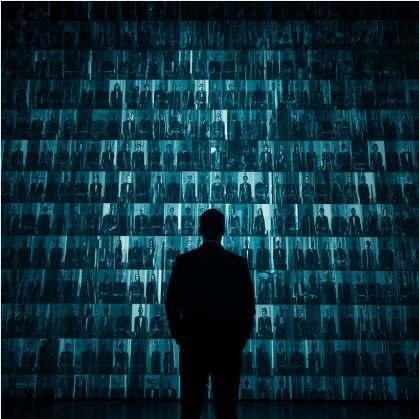
 🏆 Leading: Some people take this all the way seriously, and while it sounds like science fiction, the argument isn't as easy to laugh off as it first appears. The idea: reality occasionally "branches" or overlaps with a near-identical parallel timeline, and the shift leaves behind residue — people who "remember" the version of events from the timeline we apparently left. Proponents point to physics concepts like the many-worlds interpretation of quantum mechanics, where every possible outcome technically happens somewhere, as a legitimate framework rather than just a metaphor borrowed for spooky internet threads.
Nobody serious claims this is proven — it's a minority, largely unfalsifiable position that mainstream physicists reject as a misapplication of quantum theory to macroscopic memory. But its defenders ask a fair question back: why does this specific explanation keep resurfacing independently across cultures and decades, long before "multiverse" was a pop-culture buzzword? Coincidence, or a genuinely strange thread worth pulling on rather than dismissing outright? (67%)
 🥈 The explanations feel a little too convenient. Sure, "brains reconstruct memories" sounds tidy — but it doesn't actually explain why specific, oddly detailed memories converge across millions of strangers who never spoke to each other, span different countries and generations, and in some cases predate the internet making cross-contamination easy. People don't just vaguely misremember the Monopoly Man — they describe exactly where the monocle sat and which eye. That's a strange amount of shared specificity for something psychology treats as a footnote.
No study has definitively resolved why particular false memories cluster so precisely rather than being randomly distributed noise, the way you'd expect from ordinary forgetting. Researchers can point to mechanisms — schema theory, the misinformation effect — without actually explaining why the errors pile up on the same handful of details worldwide, independently, instead of scattering evenly. Calling that "solved" feels premature. Something about how collective memory forms in the internet age is clearly still not fully mapped. (33%)🌍 🇨🇳 China
Poll as Guest Infographics
Similar to hewsay's "The Mandela Effect: why do thousands of strangers share the exact same false memory?"
Why is it called the Mandela effect? What is the origin of the Mandela effect? As long as you keep the Mandela Effect grounded in reality as strictly a false memory shared by the general public, it does seem to be valid. As long as you keep the Mandela Effect grounded in reali...
If the Mandela Effect were Real, Why Do Some People Remember the Original Timeline and Other People Don't? If one treats the question hypothetically (“if the Mandela Effect were real” meaning genuine alternate timelines or reality shifts), the observed pattern (some remember t...
Scientists just "de-extincted" the dire wolf. Which species should be revived next?
In April 2025, Colossal Biosciences announced the birth of three gray wolf pups genetically edited (20 edits across 14 genes) using ancient DNA from a 13,000-year-old tooth and a 72,000-year-old skull to resemble dire wolves, which went extinct about 12,500 years ago. Critics argue this is really just a modified gray wolf, not a true resurrection, since dire wolves are genetically quite distant relatives. Colossal is also chasing the woolly mammoth, the dodo, and the thylacine (Tasmanian tiger), backed by billions in funding. If you could pick one extinct species to bring back with this technology, which one would you choose, and why?

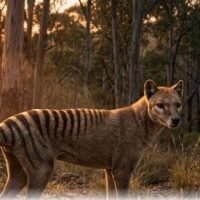 🏆 Leading: Thylacine (Tasmanian Tiger)
The thylacine, or Tasmanian tiger, was the largest carnivorous marsupial of modern times until the last known individual died in Hobart Zoo in 1936, decades after bounty hunting for allegedly killing livestock drove the species to collapse. Colossal Biosciences and University of Melbourne researchers are using the fat-tailed dunnart, a mouse-sized marsupial, as a genetic template, guided by an unusually well-preserved thylacine genome extracted from a juvenile specimen kept in ethanol. Because marsupials give birth to tiny, underdeveloped young that finish growing in a pouch, some scientists argue thylacine revival is technically more feasible than mammoth or dodo projects, though still years away. (55%)
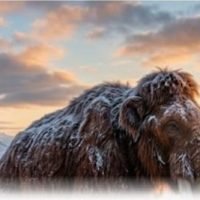 🥈 Woolly Mammoth
Colossal Biosciences is genetically engineering Asian elephants — their closest living relative — to express mammoth traits like dense fur, thick fat layers, and small ears suited to Arctic cold, using ancient DNA recovered from frozen specimens. The company aims to birth the first calves by 2028 and eventually rewild herds across Siberian tundra, arguing mammoths once trampled trees and compacted snow in ways that kept permafrost frozen, slowing carbon release. Critics counter that the result is really a cold-adapted elephant hybrid, not a true mammoth, and question whether Arctic ecosystems and elephant surrogate mothers are ready for the experiment. (18%)
 🥉 None of these — leave extinction alone
Not every scientist — or voter — is convinced de-extinction is worth pursuing. Skeptics point out that roughly one million species are currently at risk of extinction according to UN estimates, and argue the tens of millions of dollars Colossal has raised would save far more biodiversity if spent on habitat protection and anti-poaching efforts instead. There's also a scientific objection: these projects don't produce genetically identical originals, just edited hybrids of living relatives, so calling it 'de-extinction' may overstate what's actually happening. Ecosystems have also changed dramatically since these species vanished, raising questions about whether revived animals could even survive, let alone thrive, in the modern world. (18%)🌍 🇨🇳 China
Poll as Guest Infographics
Similar to hewsay's "Scientists just "de-extincted" the dire wolf. Which species should be revived next?"
Scientists have genetically engineered wolves with white hair like the extinct dire wolf. What other animals do you expect scientists to bring back from extinction? It’s actually quite important we don’t go around telling people that dire wolves have been brought back from ext...
IUCN Canid Specialist Group statement on Colossal "Dire Wolves" : r/Paleontology. Skip to main contentIUCN Canid Specialist Group statement on Colossal "Dire Wolves" : r/Paleontology. IUCN Canid Specialist Group statement on Colossal "Dire Wolves". Colossal convinced thousands...